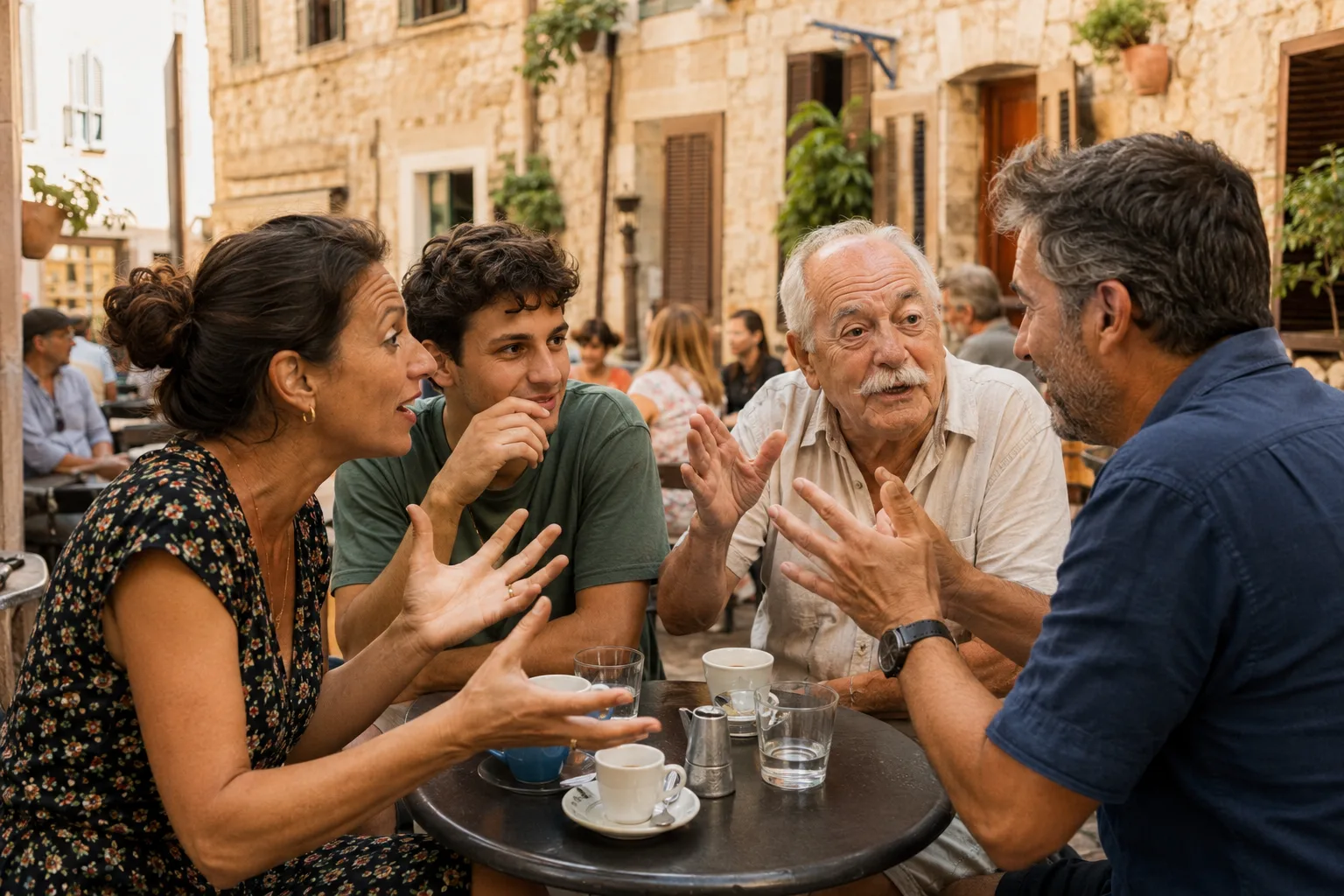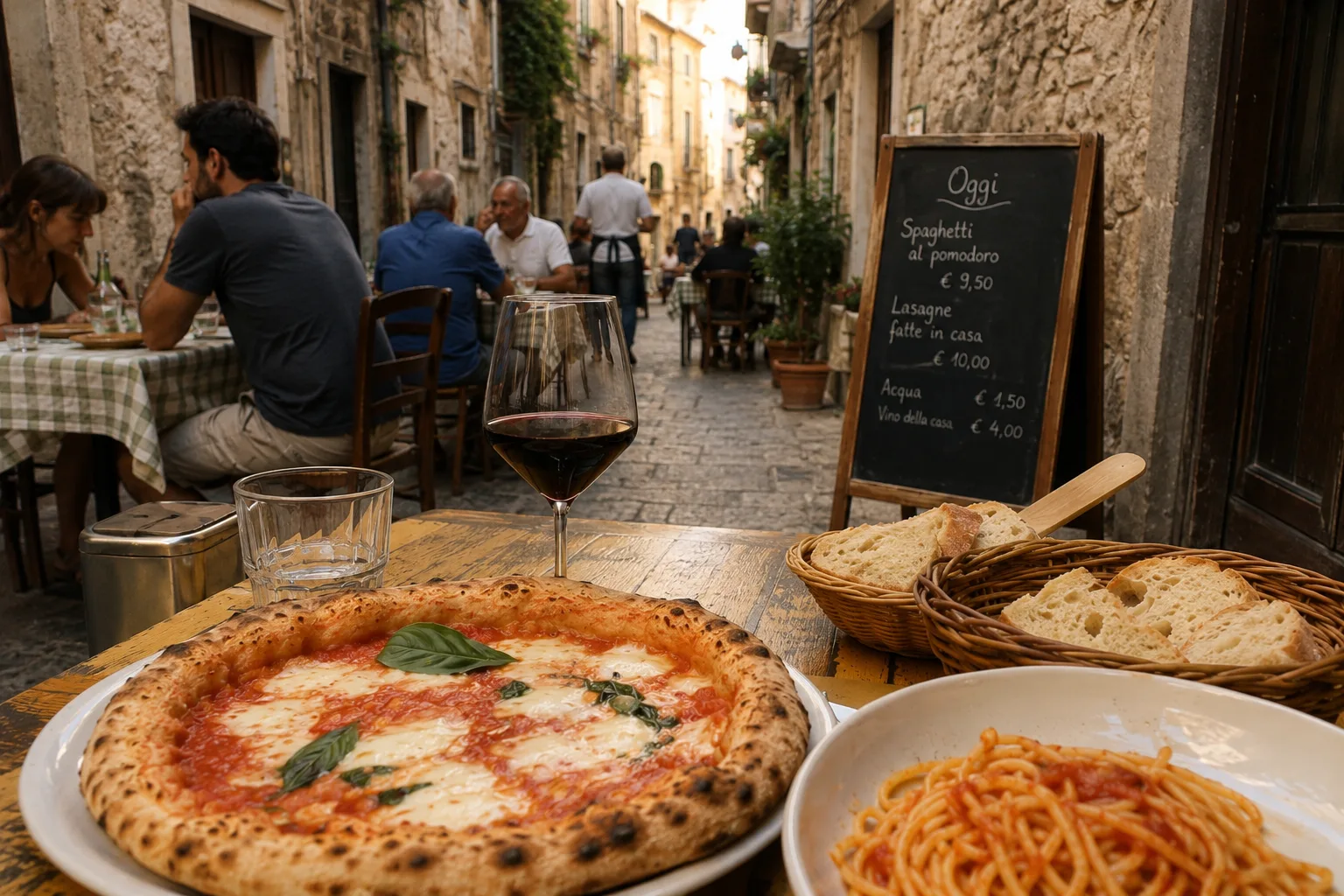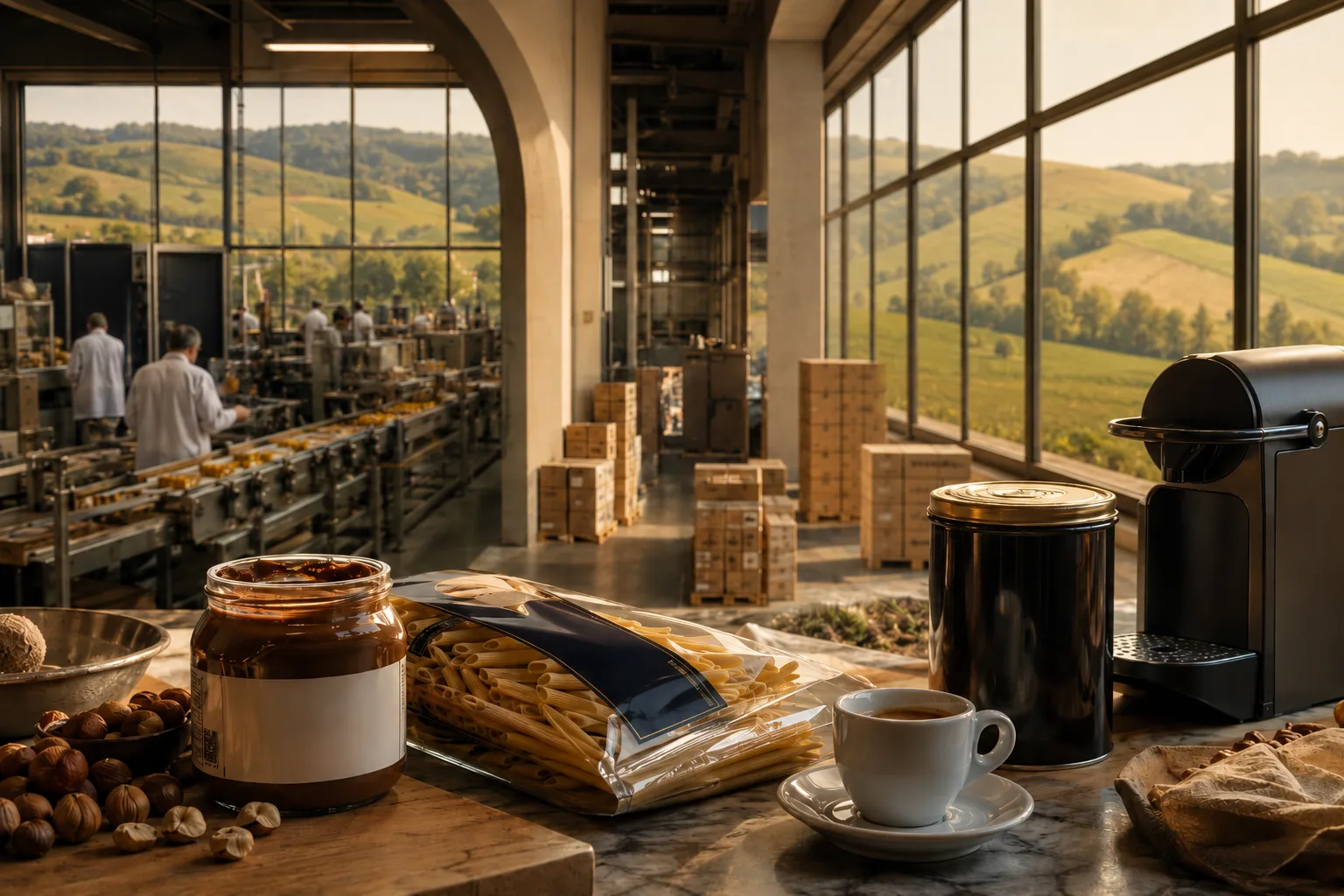
Such formulas begin with real observations and harden as they circulate. Espresso at the bar carries strong symbolic weight because it brings together speed, an affordable price, a repeated gesture and urban sociability. A daily ritual, though, is not governed like a rulebook. It changes with age, work, neighbourhood, season and even the mood of the person walking into the café. Customs are real; treating them as universal commandments produces a cartoon version of the Italian with a cup in hand.
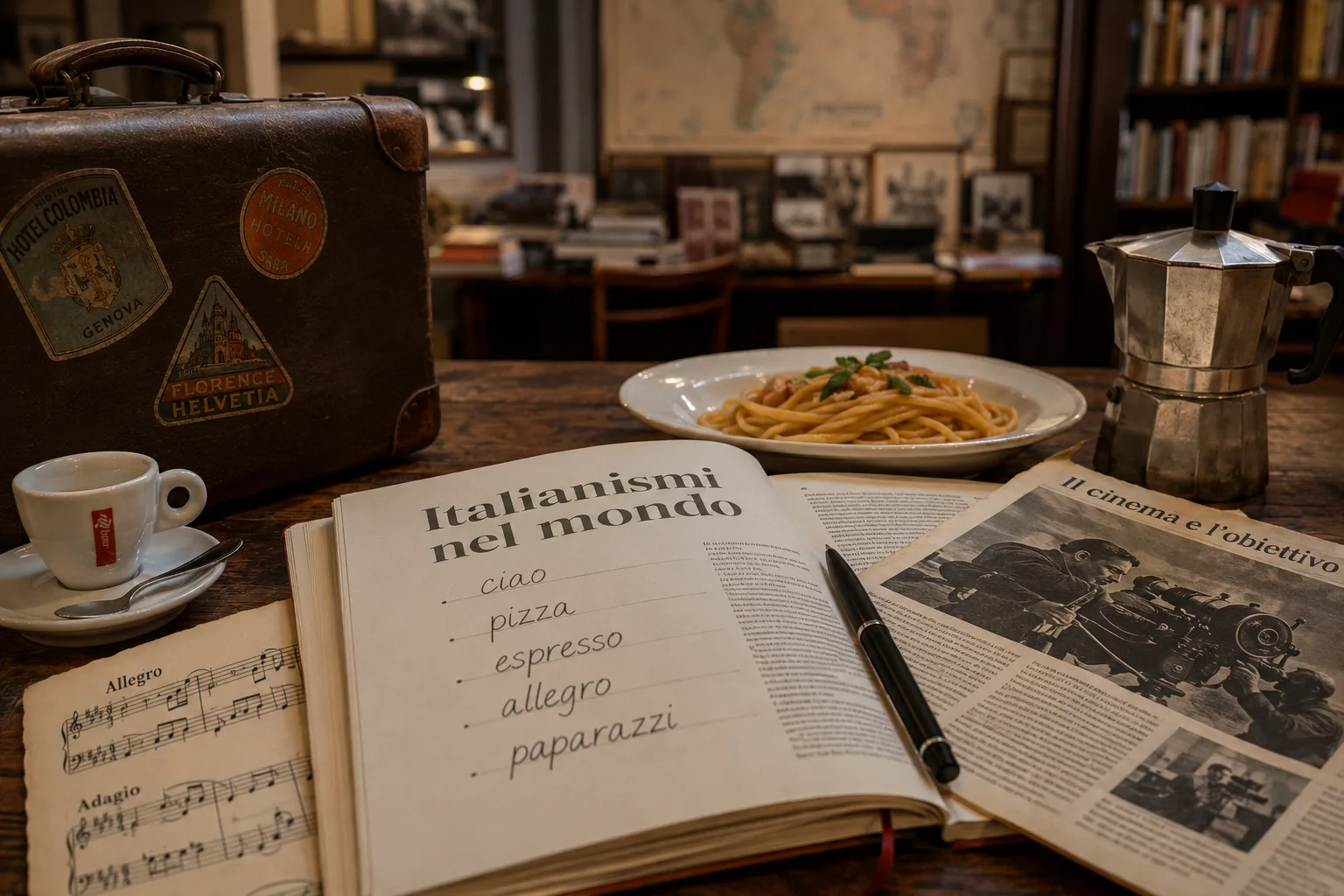
Language itself has kept this flexibility. Treccani notes that “espresso” began as the full expression caffè espresso before becoming a noun in its own right. A 1956 geolinguistic survey found that “espresso” was the shared term across Italy for the strong coffee served at a bar. That common word did not erase local differences or home preparations. It provided a national code within which every city continued to speak in its own inflection. [1]
One coffee, many coffees
At an Italian bar, ordering “a coffee” will usually bring an espresso. It is a practical convention: nobody needs to specify quantity, machine or cup. Anyone wanting something else adds a detail (macchiato, corrected with a splash of spirits, decaffeinated, ristretto, long or cold) and the barista understands the rest. This everyday shorthand has helped make Italian coffee and espresso almost synonymous in the international imagination. The bar, however, is only one of the places where Italians drink coffee.
At home, the scene is more varied. There is the moka pot bubbling on the hob, the capsule machine used before leaving, the bean-to-cup machine, and filter coffee prepared by those who prefer a longer drink. Coffee consumed between kitchen, office and remote work carries real weight in everyday life. A 2024 YouGov survey found that four Italians in five said they drank coffee daily at home or at work; ground coffee led household purchases, followed by capsules and pods. That figure does not describe a revolt against the bar. It simply records a plurality of habits. [2]
The moka pot, above all, has an emotional value that does not rely on nostalgia. It takes a few minutes, fills the kitchen with its smell and imposes a brief wait. Capsule espresso at home offers the reverse: speed, a predictable serving and very little washing-up. Both can live in the same household. Filter coffee, while still less common than moka and espresso, also appears in the homes of people who work with foreign colleagues, travel often or prefer to drink a larger cup through the morning.
Reducing everything to five espressos a day drunk standing up may help a tourist guide, but it tells us little about people. An Italian may start the day with a moka, have an espresso at the office, stop at the bar in the afternoon and drink a decaffeinated coffee after dinner. The word remains the same; what changes is the place coffee occupies in the day.
Cappuccino and sugar
Cappuccino after lunch is the best-known Italian coffee rule in the world. Its force comes from the association between milk, breakfast and baked goods. In many Italian cafés, morning has its own precise vocabulary: cappuccino, caffellatte, latte macchiato, cornetto, brioche, biscuits. After lunch, espresso, macchiato or coffee with a dash of spirits tend to prevail because they are quicker and seem lighter in the shared imagination. The habit is recognisable, particularly among generations for whom the bar was a fixed stop before work.
It remains a habit, not a prohibition. Some people have cappuccino in the afternoon during a long break, order it at the airport, choose it while travelling because they skipped breakfast, or drink it after lunch without attaching any cultural meaning to the choice. In cafés used by students and workers with irregular hours, the boundary between “morning drinks” and drinks for the rest of the day can be far less clear. The traditional tendency exists, but it does not measure anyone’s Italianness.
The same is true of sugar. Bitter espresso is often presented as a test of authenticity, as though one had to pass a sensory examination before ordering at the counter. In practice, the teaspoon is still there on the saucer. Some people use it, others do not; some add sweetener, others choose honey at home. Preferences change with the blend, the roast and family custom. Stirring, too, has its small choreography: one person turns the spoon carefully and sets it back on the saucer, another tastes the crema first, another drinks immediately.
Professional standards do not turn these gestures into obligations. The Istituto Espresso Italiano describes the Espresso Italiano Certificato as a cup of around 25 millilitres, with a substantial crema, intense aroma and a balance that avoids astringency. It is a technical ideal, useful to baristas and roasters; the coffee served every day in the local café also depends on the machine, water, cleanliness, grind and the speed at which it is made. [3]
Many Italies
The idea of a uniform tradition collapses as soon as one enters another city. In Trieste, ordering coffee can become a lesson in local vocabulary. Espresso is nero, literally “black”; coffee with a drop of milk can be goccia or gocciato; what much of Italy calls a macchiato is known as capo. A capo in b comes in a glass, with the “b” standing for bicchiere, or glass. Turismo FVG presents this bar language as one of the city’s distinctive features, linked to Trieste’s long history in coffee trading and processing. [4]
In Naples, coffee has a different social density. It is drunk at the counter, discussed, offered, and judged for the temperature of the cup and the texture of the crema. Turning every Neapolitan into a postcard character would be misleading, but the city’s connection with coffee is recognised enough to have a day devoted to its culture. The Municipality of Naples describes coffee as an element of identity and an occasion for meetings, workshops, barista competitions and social initiatives. [8]
In Turin, Bicerin shows that milk and coffee can fully belong to a city’s tradition well beyond breakfast. The drink combines coffee, chocolate and milk or cream, served in a small glass. Caffè Al Bicerin, opened in 1763 according to the city’s tourism body, links its own history to the birth of the preparation. This is not a minor curiosity: it tells of a city where coffee meets cocoa, pastry-making and the lingering pause at the tables of historic cafés. [5]
In Salento, heat changes the ritual. Caffè leccese (espresso, ice and sweet almond milk) is drunk from a glass and often accompanies the hottest hours. The Puglia Region presents it as a preparation tied to Salento summers and to the way they turn espresso into a refreshing drink. Alongside it remain the marocchino, coffee with a dash of spirits, shaken coffee, the espressino and dozens of smaller variations. Italy’s coffee culture resembles a single manual less than a collection of local idioms. [6]
Counter, table, office
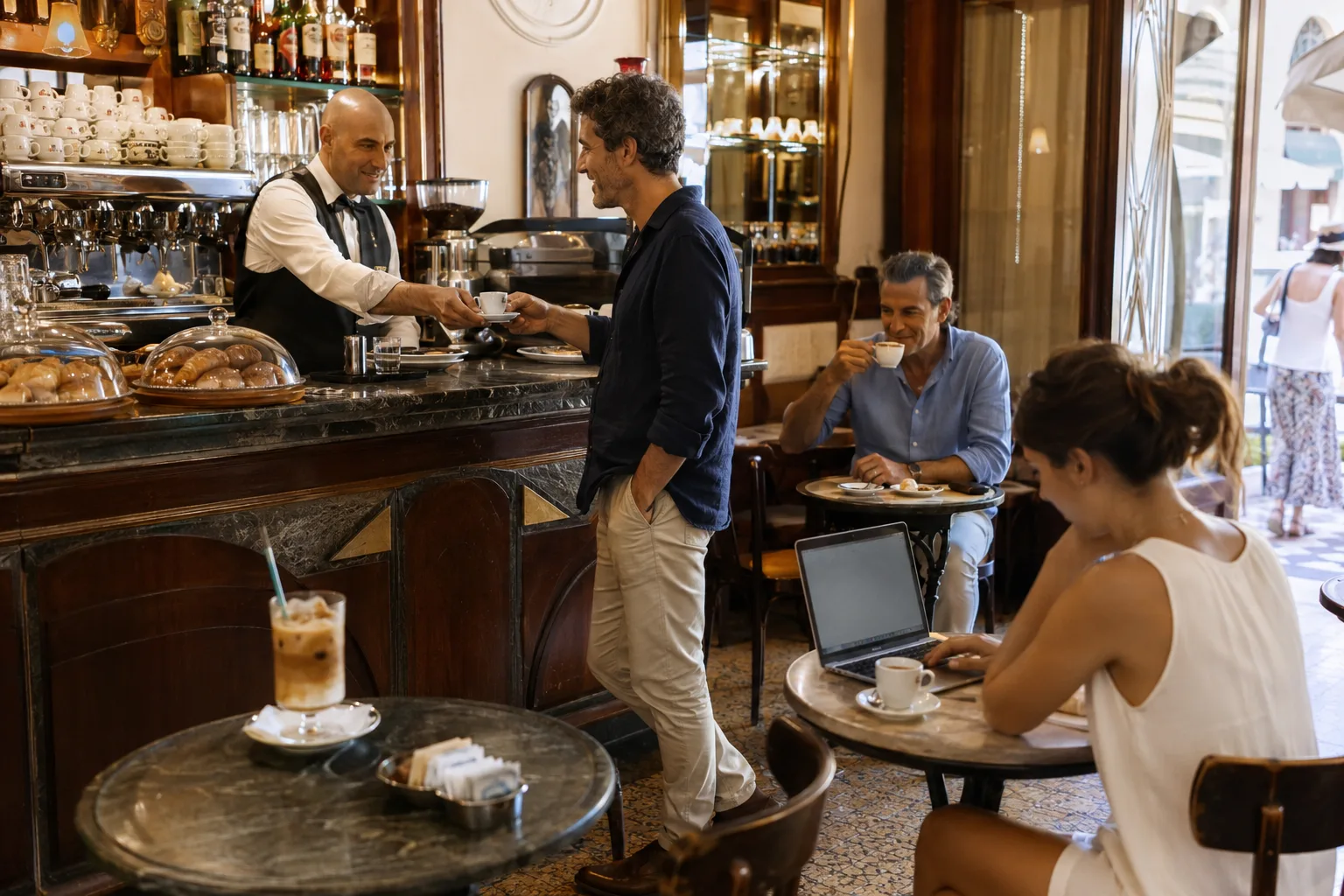
The counter remains one of the strongest symbols of the Italian break. You walk in, greet someone, order, drink and leave. Sometimes the stop lasts two minutes, yet in those two minutes come the neighbourhood news, the previous evening’s match, a remark about the weather and a greeting to someone known only by sight. The barista often remembers the usual order before the customer speaks. That familiarity explains why coffee at the counter has acquired a value greater than its price.
Contemporary habits have widened the scene. Some people sit down to work for an hour, some drink coffee in front of a computer at the office, some take a cup away on their commute, and some order a cold drink in summer. Takeaway coffee has not swept away the traditional bar, nor should it be dismissed as a cultural invasion. It answers to working hours, commuting and forms of mobility that also belong to Italy. The gesture changes, while the need for a break remains.
Research on household consumption helps put the image of the bar as coffee’s only stage into proportion. Most coffee drinkers have it at home or at work, and only some consumers associate it with coffee-shop chains. The Italian model does not live under glass: it keeps the counter as a place of recognition while adapting to kitchens, desks, stations and automatic machines. [2]
The important difference concerns the relationship with time. An espresso at the counter can be a quick parenthesis; a cappuccino at a table can stretch the morning; a moka made at home can accompany the day’s beginning. Each format creates a different atmosphere. Asking one form to stand for all the others confuses a powerful symbol with an entire life.
The ideal cup
When Italians discuss espresso quality, the debate quickly becomes concrete. The blend matters, but it is not enough. Roasting, storage, grinder settings, water, pressure, temperature, filter cleanliness and the barista’s hand all matter. Coffee made from a fine blend can come out burnt, watery or too bitter; a less ambitious blend can be pleasant when the machine is cared for and the person using it knows the craft.
The Espresso Italiano Certificato specification sets out precise parameters: quantity in the cup, hazelnut-coloured crema, fine texture, body and aromatic balance. It establishes a shared professional threshold. It does not automatically describe every espresso served in Italy. A cup at a provincial bar may be shorter, darker, sweeter and quicker to drink than the one imagined by a tasting panel. The two belong to neighbouring worlds, but they do not overlap completely. [3]
That distance also explains many arguments about crema. For some, it is the visual sign of a good extraction; for others, it can mislead, because a thick crema alone does not guarantee a clean flavour. The “perfect cup” is a useful reference, especially in professional work. Everyday coffee follows plainer criteria as well: it should please the person drinking it, arrive hot, leave no unpleasant taste and suit a conversation or a pause.
Personal taste always enters the picture. Some seek an intense roast and others lighter notes; some love a concentrated ristretto and others ask for a long coffee; some choose decaffeinated coffee after dinner. A specification can guide quality, but it cannot decide which cup should make every customer happy.
A social language
“Shall we have a coffee?” rarely means only a drink. It may be an invitation to talk after weeks of silence, a way to continue a meeting without formality, an offer to clear the air, a truce. “Let me buy you a coffee” has little economic value and a much larger relational function. Even the hand gesture that mimes a small cup is recognised as an invitation: Treccani lists it among culturally coded Italian gestures, while noting that its use varies across the country. [9]
The caffè sospeso, or suspended coffee, illustrates this dimension well. The formula is simple: someone pays for two coffees and leaves one available for a person who cannot afford it. Treccani records the expression as a custom of Neapolitan origin and links it to a cup offered to a stranger. Its history has several versions, moving between popular memory, media revivals and newer solidarity initiatives. It should therefore be told without turning it into an unchanging practice observed with the same intensity throughout Naples or Italy. [7]
Coffee vocabulary also enters working life: “a quick coffee”, “a coffee break”, “let’s talk over coffee”. These are flexible expressions. A break may last five minutes or an hour, be taken standing or seated, and involve contracts, football, family troubles or nothing at all. Coffee offers a simple setting for coming closer without having to declare the importance of the meeting at once.
This helps explain why many people respond with irony to rigid rules circulated online. They know that behind the little cup lies a shared habit, but also the right to change one’s order when the day changes.
The exported myth
Cinema, tourist guides, Italian restaurants abroad and social media have turned several common habits into absolute laws. “Never cappuccino after eleven”, “never milk in coffee”, “never sugar”, “never long coffee”: short phrases, easy to remember and perfect for a thirty-second video. They succeed because they draw a neat line between those who know how to behave and those at risk of looking like tourists. The difficulty begins when simplification replaces real people.
The rules still tell us something true. They say that espresso at the counter has historical centrality, that cappuccino often belongs to breakfast, that many cities have their own relationship with coffee and that Italians enjoy discussing flavours, temperatures and measures. They become false when they erase the moka at home, milk drunk in the afternoon, iced coffee in summer, the cup carried away, the sugar in the saucer or Bicerin served in Turin.
Italian coffee tradition lives precisely because it is recognisable without being fixed. An espresso can remain a national symbol and coexist with a Triestine capo in b, an iced caffè leccese, a moka prepared at dawn and a cappuccino ordered at four in the afternoon. The same word, “coffee”, continues to hold different gestures together. Perhaps that is the most Italian rule of all: knowing the ritual exists while remembering that each person speaks it in their own accent.
Bibliography
Discussion
Join discussion!
There are already 0 comments on this article in the forum.