Cities before brands
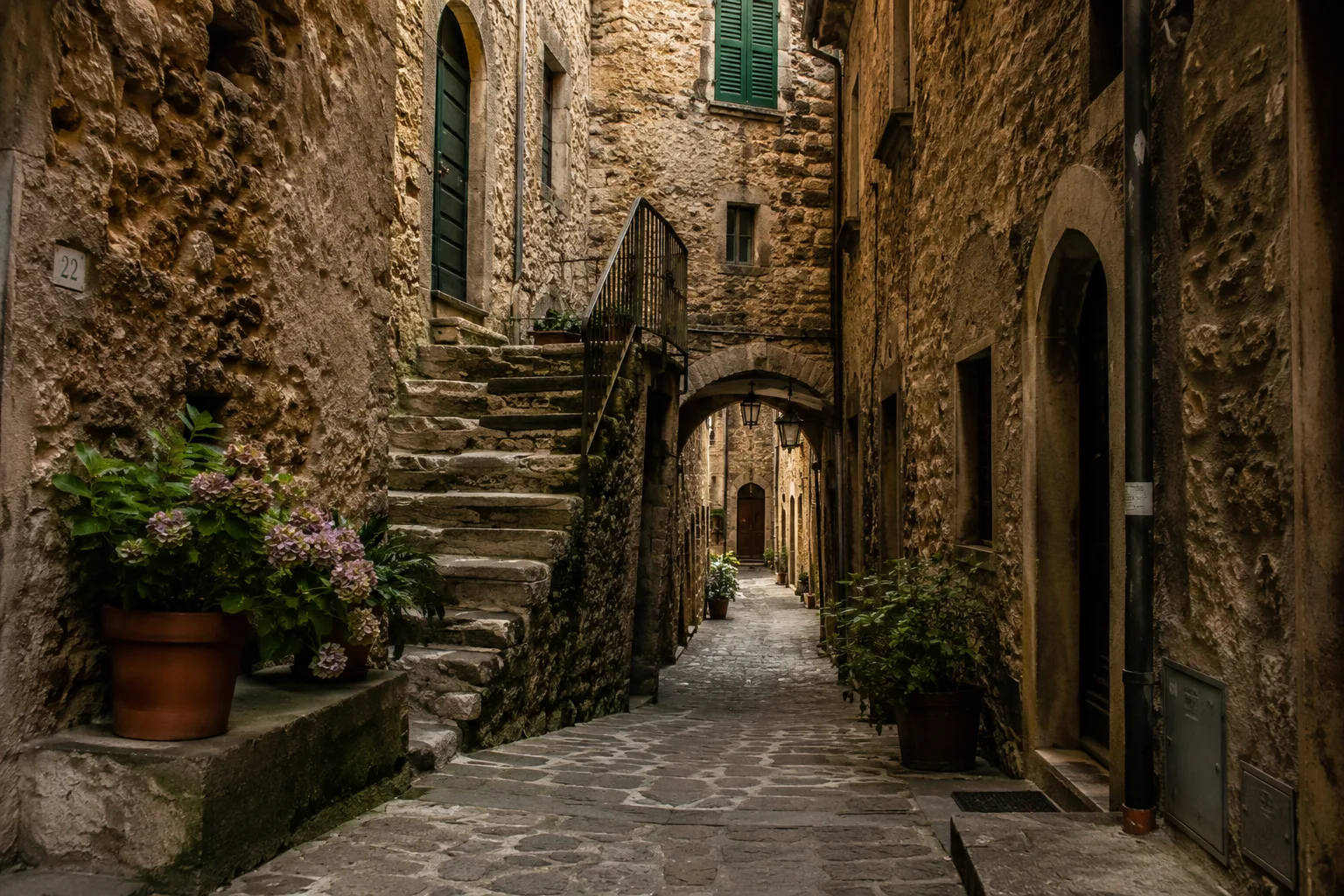
Italian family capitalism did not arise from some national instinct for doing business within the clan. Its origins are more concrete: uneven industrialisation, a dense network of medium-sized towns, productive districts, craft workshops that became factories and local traders who expanded into national and foreign markets. Italy built large public and private groups, but it also built a dense system of medium-sized companies tied to specialised skills. In 1991, the country’s 199 industrial districts employed roughly 2.2 million people, around 45 per cent of manufacturing employment at the time. Bergamo offers one way into that history: Brembo began in 1961 in Paladina, near the city, as a family mechanical workshop founded by Emilio Bombassei, his sons Sergio and Alberto, and their brother-in-law Italo Breda. In Gazoldo degli Ippoliti, in the province of Mantua, Steno Marcegaglia started a small business in metal sections in 1959; it later became an international steel group. Alba links Ferrero to the hazelnuts of the Langhe, Parma joins Barilla to pasta, Trieste places Illy in a port city shaped by coffee and central-European trade, and Turin remains inseparable from Fiat and twentieth-century industrial labour. These firms were born in Italy, but first they were born in a street, a workshop, a port or a local supply chain. [3][4][5]
No firm grows alone
Corporate biographies enjoy the founding scene: the first workshop, the decisive intuition, the family taking a risk. It is an effective image and often contains part of the truth. Much of what turns an idea into an industry is left outside the frame. Growth requires credit, machinery, roads and railways, technicians, workers, distributors, sales staff, advertising, dependable suppliers and customers willing to pay. It also requires towns with skills, vocational schools, local banks and public administrations able to support development, or at least not obstruct it. Entrepreneurs make decisions and assume responsibilities that can be considerable, but an industrial group lives through the work of many people and through relationships built over years. The same pattern recurs whether the product is brakes, pasta, coffee machines or steel. Family ownership can keep product knowledge, factories and markets close together: those in charge know the sector and see quickly what a mistake does to the family name. The same proximity can become a weakness when those at the top stop listening to outside expertise or confuse the interests of relatives with those of the company. The model works when the surname is accompanied by rules, competence and accountability. Without them, it is simply concentrated ownership. [3][1]
Ferrero and Alba
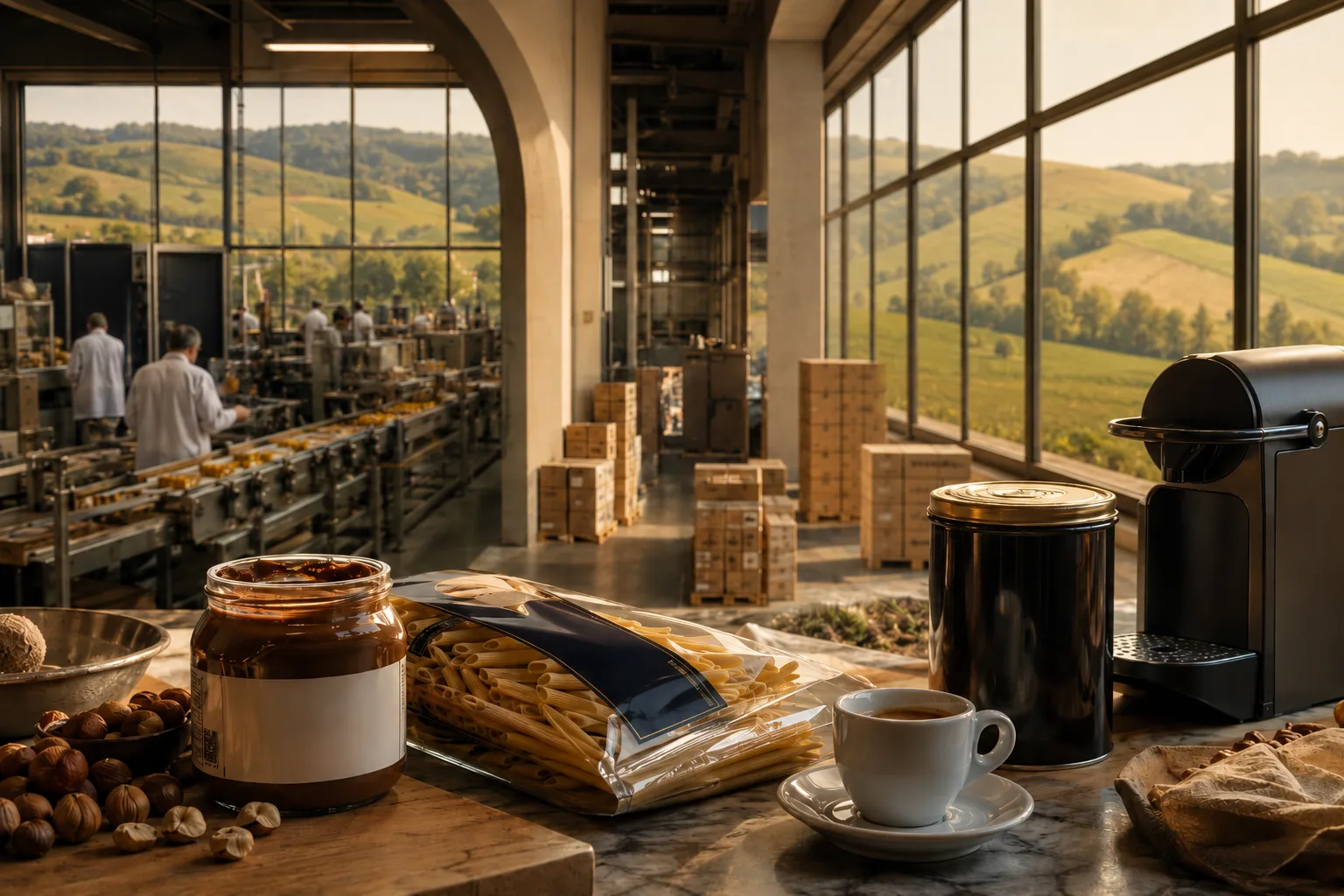
Ferrero is the clearest case because it joins a surname, an everyday product and global reach. The story begins in Alba in 1946, in a Piedmont where hazelnuts were readily available and cocoa was scarce after the war. The first Giandujot paste mixed hazelnuts, sugar and limited quantities of cocoa: a practical response to an expensive, difficult-to-source ingredient. Supercrema followed, and then Nutella, launched under that name in 1964. The tale of a small confectioner conquering the world is only part of the picture. Expansion also required industrial production, a commercial network, brand protection, advertising and plants on several continents. Ferrero remains privately held and family-owned, now in its third generation, but it bears little resemblance to a provincial pastry shop. The group says it sells more than 35 brands in over 170 countries and reported consolidated turnover of €19.3 billion for 2024–25. Giovanni Ferrero is executive chairman, while Lapo Civiletti is chief executive. Family control therefore exists alongside professional management and an international acquisition strategy. The Ferrero name remains on the jar, yet behind it stand growers, factories, laboratories, logistics networks and thousands of employees. Alba retains industrial and symbolic weight; the company now operates on a global scale. [6][7][8]
Barilla and home
Barilla tells another story: how an everyday product, pasta, became a national image. The company began in Parma in 1877, when Pietro Barilla senior opened a small bread and pasta shop. Its subsequent growth was not only a matter of larger plants. It was also about the way an industrial brand learned to speak of domestic life. For decades, Barilla advertising has used laid tables, families, homecomings, Sundays and ordinary gestures. The Barilla Historical Archive records the company’s presence on the Italian television programme Carosello from 1958 and shows how, from the mid-1960s, the Italian family became a recurring figure in the brand’s communication. Advertising created a sense of intimacy, continuity and reassurance around an industrial product. That construction has had real effects on collective memory. Barilla remains a family-owned food group present in more than one hundred countries, while daily management has been entrusted to Gianluca Di Tondo, its CEO since 2023 and not a family member. The distinction matters. The Barilla family retains a central role in ownership and governance, but running a global food business demands international expertise, distribution systems, financial management and knowledge of markets far from Parma. When the owner’s surname is also the brand, every public remark can become a commercial issue. [9][10][11]
Trieste and coffee
Illy shows that a family business can grow around a global commodity without having anything domestic about it in the ordinary sense. Francesco Illy founded illycaffè in Trieste in 1933, in a city shaped by maritime trade, central-European connections and a long familiarity with coffee. Beans arrive through agricultural supply chains spread across the world; roasting, research, machine design, barista training and cultural communication took form in the Adriatic port. The company sells coffee, but it also sells a precise idea of consumption: the small cup, the bar, hospitality, design, art and the University of Coffee. In its accounts, illycaffè describes itself as family-controlled and manager-led. Rhône Capital acquired a minority stake in 2021; the Illy family retained control, while Cristina Scocchia has been chief executive since 2022. The case clears up a common misunderstanding. A family can remain decisive without owning every share or occupying every executive office. What matters is who sets strategic direction, what voting rights exist, how independent the board is and how power is divided between ownership and management. Illy has recognisable roots in Trieste, yet its market is international. The city remains inside the brand as memory, expertise and style; coffee remains a global commodity tied to growers and countries far from the Adriatic. [12][13]
Agnelli, Fiat, Exor
The Agnelli name calls for exact language. Fiat and the Agnellis marked Turin, industrial labour, mass mobility, the relationship between business and the state, publishing, sport and Italian popular culture. Saying today “the Agnellis’ Fiat”, however, compresses more than a century of mergers, spin-offs, holdings and financial markets into a nostalgic formula. Exor descends from the history begun by Giovanni Agnelli with Fabbrica Italiana Automobili Torino in 1899, but it operates as a holding company with international investments far beyond the motor industry. At 31 December 2025, Giovanni Agnelli B.V., a company owned by descendants of Fiat’s founder, held 54.94 per cent of Exor’s economic rights and 83.97 per cent of its voting rights. The gap between capital and votes already says much: a family can retain decisive influence without running a production line. Stellantis, created by the 2021 merger of Fiat Chrysler Automobiles and PSA, is incorporated in Amsterdam and has a transnational industrial, financial and commercial structure. Calling it simply Italian, or simply Agnelli-owned, obscures how it works. Its Fiat heritage remains Italian in public memory, Turin’s history and part of its operations; the company itself is global. [14][15][16]
Family makes room
What Ferrero, Barilla and Illy have in common is not a relative permanently seated at the chief executive’s desk. It is the capacity to influence the company’s general direction: succession, board composition, brand protection, investment, acquisitions, capital opening and debt. At Ferrero, Giovanni Ferrero works alongside an external CEO; at Barilla, the family remains central to governance while Gianluca Di Tondo runs the group; at illycaffè, Andrea Illy chairs the board and Cristina Scocchia leads operations. This arrangement can help a company escape one of the familiar weaknesses of family ownership: the belief that command should pass automatically to the nearest relative. An outside manager may bring experience in other markets, more freedom in choosing collaborators and a clearer separation between personal ties and professional assessment. The family, in turn, may defend a longer horizon and a brand coherence that a manager appointed for a few years would feel less personally. The arrangement only works if roles are clear. A CEO without autonomy becomes an executor; a family without effective control mechanisms becomes an owner only on paper. Shareholder agreements, independent directors, transparent appointment criteria and succession rules make it less likely that every generational handover will become a private crisis inside the business. [7][11][12]
Long time, hard rules
Family companies can have concrete advantages. Stable ownership can make it easier to invest in a plant, a supply chain or a brand even when the return will not appear in the next quarter. A surname printed on the package raises the reputational cost of a reckless decision: a crisis affects more than a logo; it touches the family that bears the name. Relations with suppliers, territories and employees may last longer when those deciding expect to pass the company to children or grandchildren. The seventeenth AUB Report notes that fixed assets among the family firms in its sample rose by 9.2 per cent in 2024, confirming a stronger investment propensity than among non-family firms in the same sample. None of this turns family ownership into a moral guarantee or a universal formula. Succession can favour an unsuitable heir; disputes between family branches can delay necessary choices; the limited transparency of unlisted companies can protect privacy but also conceal excessive concentrations of power. The AUB Observatory estimates that 33.5 per cent of family firms with revenues above €20 million may face a generational transition between 2025 and 2034. Continuity does not come from blood. It comes from preparation, capable managers and rules that still hold when family relationships become difficult. [1]
A plural economy
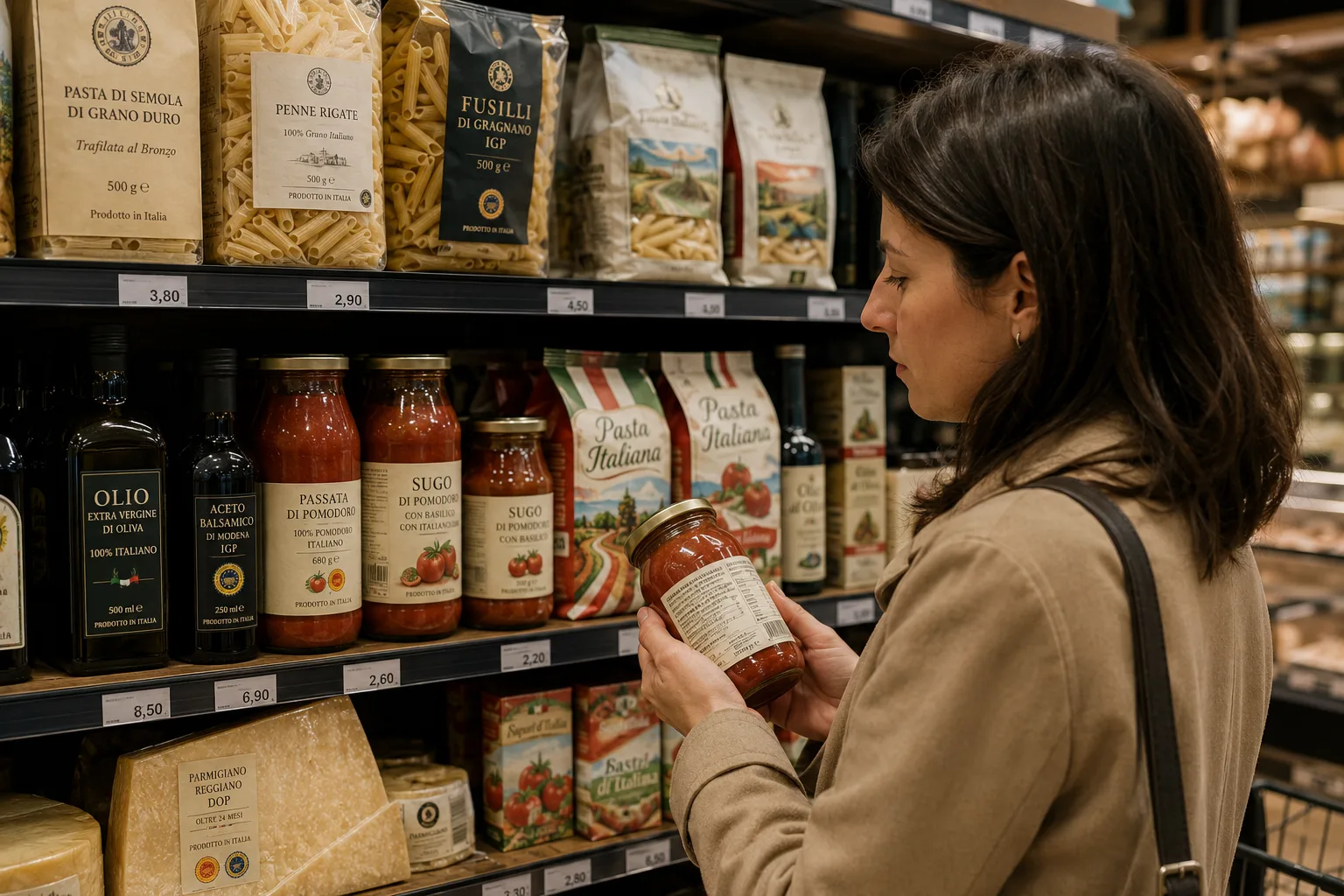
Italy has many family businesses, but its industry is not made of families alone. Alongside Ferrero, Barilla, Illy, Brembo, De’Longhi and Marcegaglia there are listed groups, state-owned or state-participated companies, cooperatives, businesses controlled by funds, foreign multinationals with Italian factories and companies born in Italy whose corporate architecture now extends abroad. Eni, Enel, Leonardo and Fincantieri have a relationship with the state very different from that of a privately held family business. Foreign capital is also a structural element of manufacturing. Mediobanca’s Research Department reports that foreign-controlled companies account for 48 per cent of the turnover of firms with more than 250 employees operating in Italy, and 75 per cent of turnover in manufacturing alone. The figures require at least four separate questions: where is the factory, who controls the capital, where are decisions taken and where is brand value created? A company can manufacture in Italy, employ Italian workers and belong to a foreign group. It can also be Italian-controlled and operate plants across several countries. Made in Italy often describes origin, style, production or reputation; it does not automatically describe ownership. Surnames make a complicated economy easier to read, but they can also hide the factories, supply chains, workers, shareholders and countries involved. [17]
Names that endure
Ferrero, Barilla, Illy, Agnelli, Benetton, Bombassei, Marcegaglia and De’Longhi remain familiar to Italians because they have accompanied everyday habits, urban change, advertising, work and consumption. A food brand enters kitchens and childhood memories; a car group enters the history of factories and trade-union conflict; a fashion company communicates status; a steelmaker can reshape an industrial area while remaining almost invisible to those outside the sector. Each surname carries a different history, and there is no useful single formula for all of them. Some families will retain control, some will open capital, some will sell, divide or turn their presence into a holding company. External managers will continue to gain weight even where the founder’s name remains on the door. These surnames do not signal a country frozen in the past. They describe how local firms, often born in very specific towns, learned to become national and then international. The relevant question now concerns the rules of that continuity: who decides, for how long, under what checks and in relation to which communities of work. [1][17]
Bibliography
Discussion
Join discussion!
There are already 0 comments on this article in the forum.