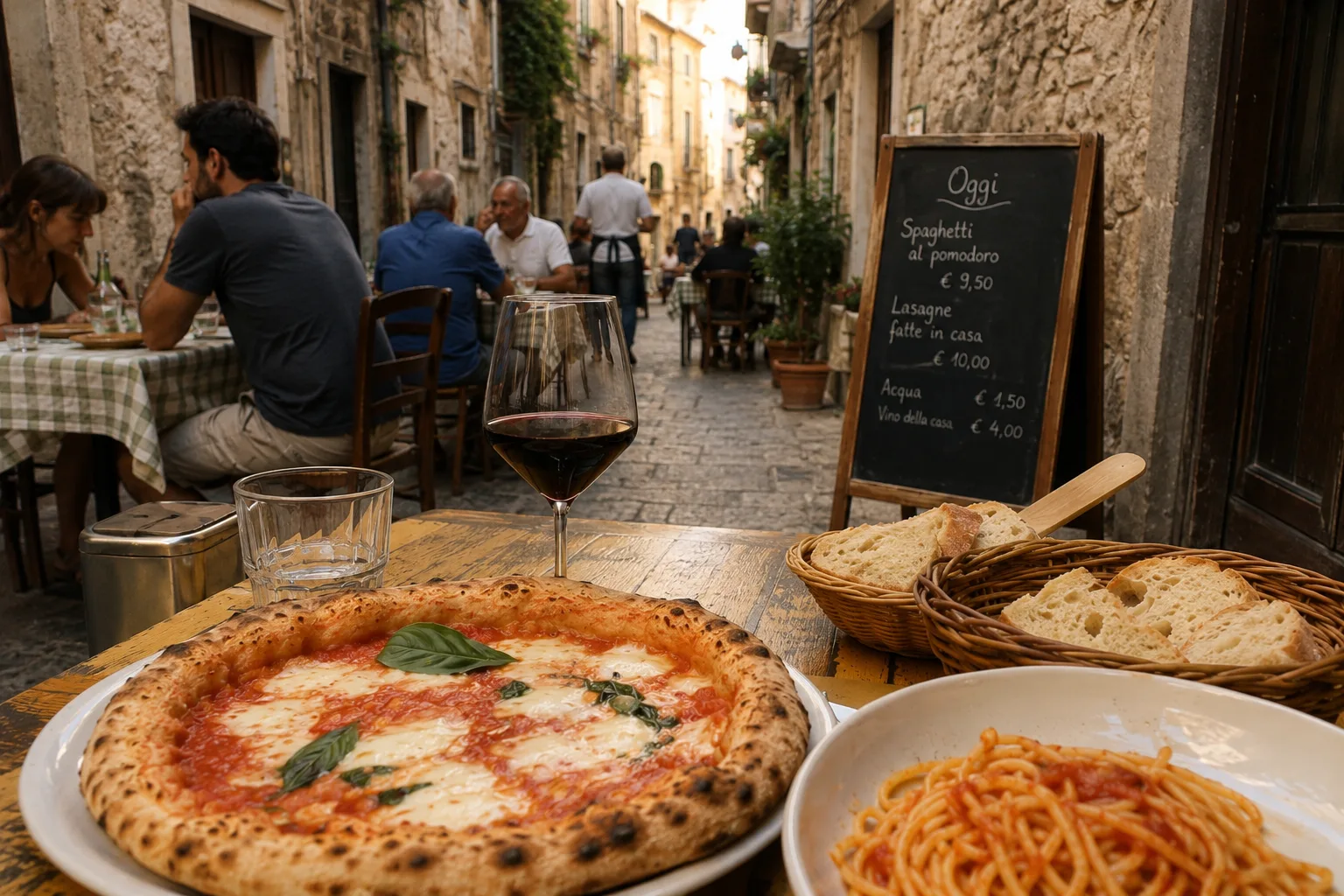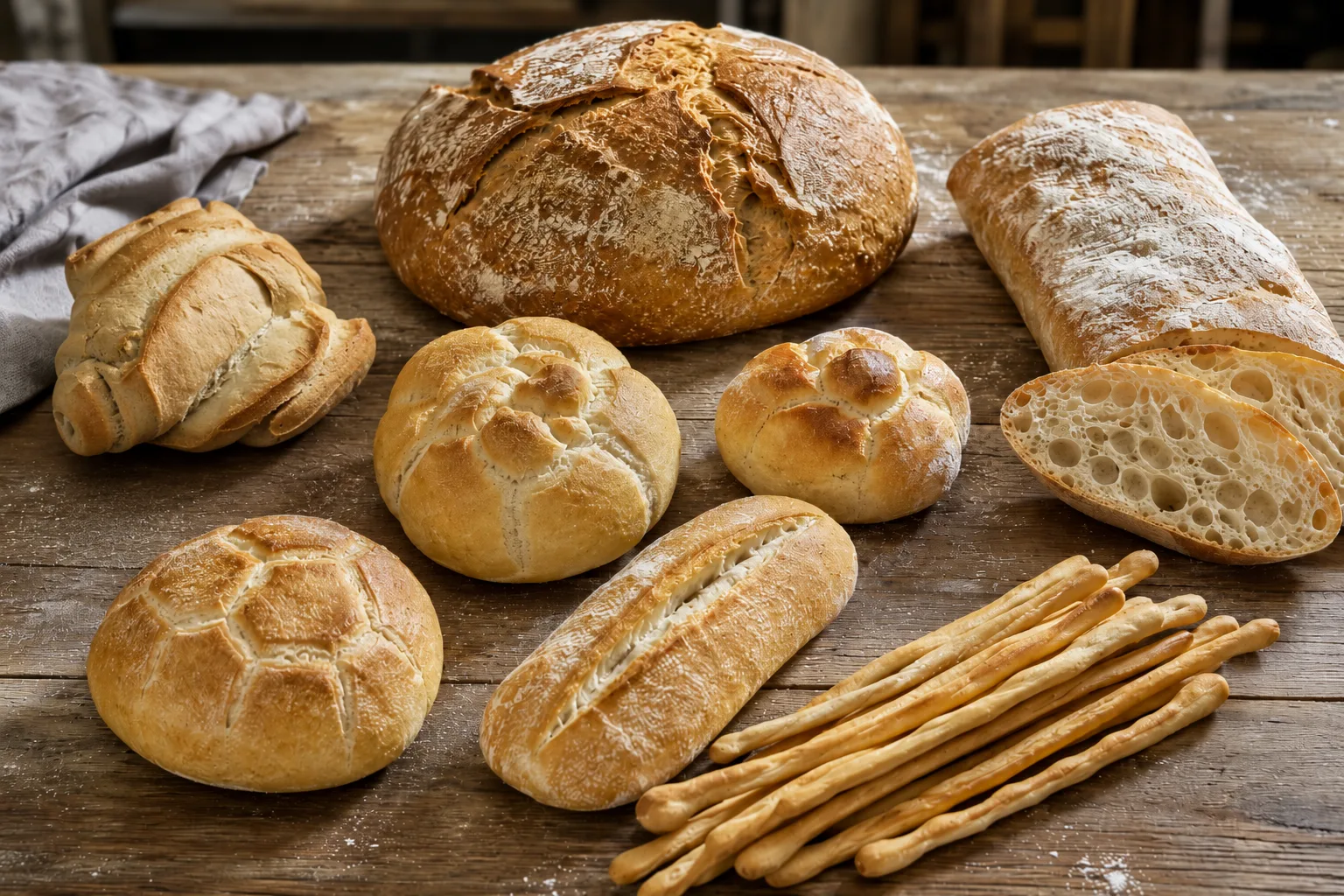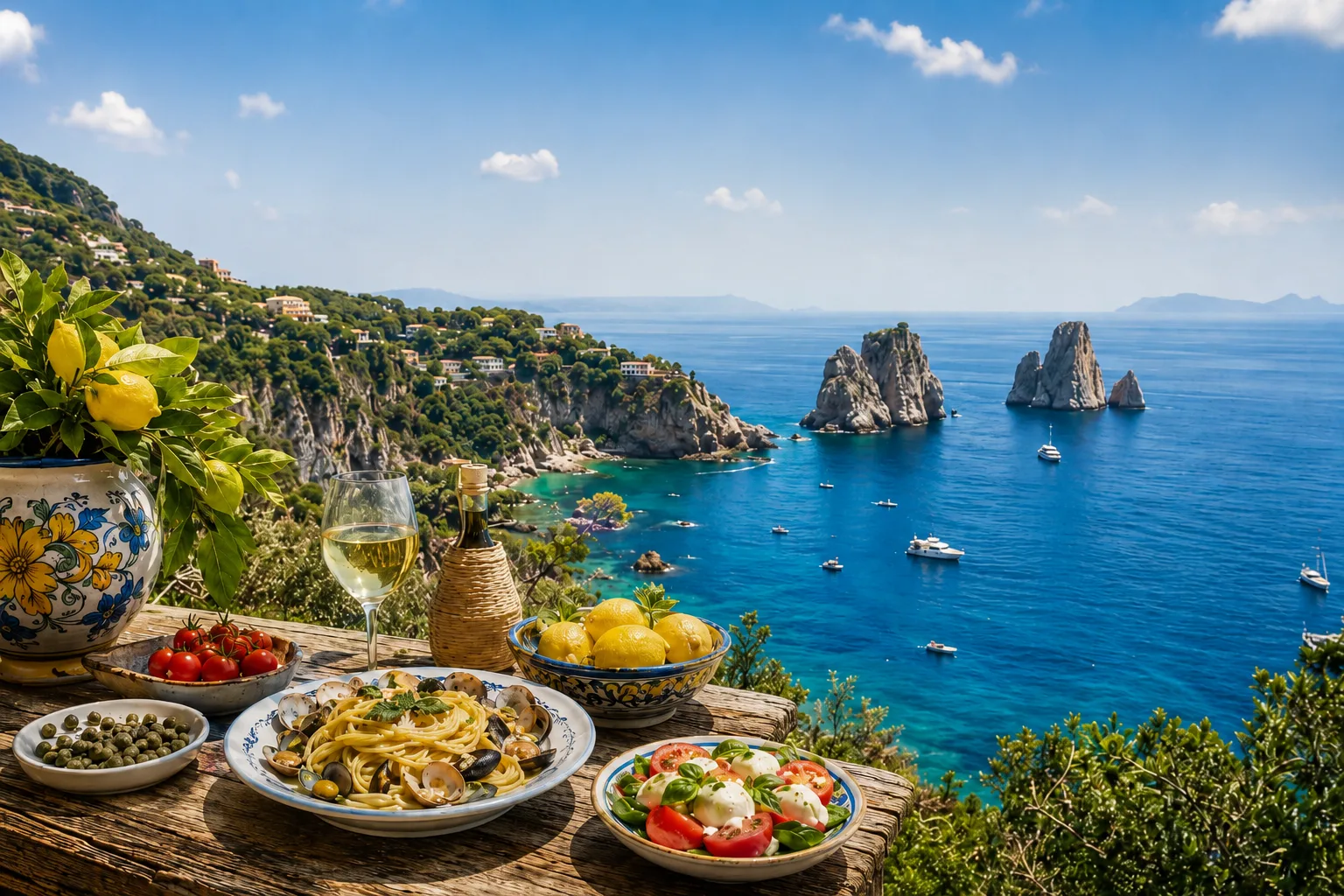
Italian cooking is strong because it looks simple without being simplistic. A margherita pizza, pasta with tomato sauce, a bean soup, a risotto or a slice of tart need no specialist knowledge to be enjoyed. The flavours are clear, the ingredients are often identifiable, and the dish makes a straightforward promise.
Behind that accessibility, however, lies a much deeper system of seasons, local produce, household skills, family relationships and gestures repeated over time. In 2025, UNESCO added Italian cooking to its Representative List of the Intangible Cultural Heritage of Humanity. The recognition is not a catalogue of "official" recipes, nor a claim that Italian food is superior to every other cuisine. It concerns the cultural practices surrounding food: care for ingredients, knowledge passed down between generations and the shared meal as a social occasion [1].
The same idea appears in UNESCO's recognition of the Mediterranean diet, where food is presented not merely as nourishment but as a body of knowledge, rituals, rhythms and relationships. Eating together builds continuity and belonging in a community [2].
Italian food can be eaten quickly, sold in a casual venue or served in a fine-dining restaurant; it can be made from very few ingredients or require real technical skill. It almost always retains a sense of familiarity. Even someone who has never been to Italy easily associates an Italian dish with a table, a shared lunch, an everyday gesture. Italian food suggests a way of living time, company and pleasure.
A mosaic of territories
Saying "Italian cuisine" is useful, but it can mislead if it suggests a uniform tradition. Italy has never been, from a culinary standpoint, a single compact table. Before political unification, the peninsula was made up of cities, countryside, ports, mountains, islands and small states with very different habits. A Lombard risotto, a Venetian polenta, a Tuscan ribollita, a Roman carbonara, a Sicilian pasta con le sarde and a plate of Puglian orecchiette belong to the same broad culinary family, but they come from different local histories.
Massimo Montanari recalls that the historical vocation of Italian cuisine is more territorial than regional in the modern administrative sense. Recipes are often tied to cities, valleys, coastlines, plains and markets that do not necessarily coincide with the boundaries of the twenty regions [3]. This explains why Italians argue so passionately about ingredients, pasta shapes, dish names or cooking methods.
From the outside, some of these discussions can seem excessive. Why worry whether ragù is served with one pasta shape rather than another? Why distinguish between Genoese focaccia, Roman pizza in teglia and Neapolitan pizza? For someone who grew up inside this culture, those details are signals of origin, memory and belonging.
In the North, rice, butter, mountain cheeses, maize and slow cooking dominate; in the central areas, olive oil, pulses, inland meats and peasant recipes come to the fore; in the South and on the islands, durum wheat, tomatoes, fish, citrus fruit and preserves are more common. These are tendencies, not absolute rules. Culinary Italy is full of exceptions and exchanges. The tomato, now considered almost inevitable in many Italian recipes, arrived from the Americas; rice spread through complex commercial and agricultural networks; sugar, spices, dried pasta and preservation techniques tell of ancient ties with the Mediterranean and the Arab world.
Italian cuisine is a tradition capable of change, but one that keeps valuing the place where a recipe was formed. The world likes the idea of a unified Italian cuisine; Italians keep experiencing it as a map of many neighbouring and often proudly different cuisines.
Simplicity and technique
One of the great advantages of Italian cuisine is its apparent simplicity. Apparent, precisely. A dish with few ingredients can be harder to execute well than an elaborate preparation, because it leaves no room to hide mistakes. A pasta with garlic, oil and chilli can turn out fragrant and balanced or heavy and disjointed; a cacio e pepe can become creamy or turn into a lumpy mass; a pizza can be light and crisp or gummy and wet.
Italian cuisine has built part of its prestige on this balance: few elements, but chosen and treated correctly. The tomato must keep its identity, the oil must be recognisable, the cheese must have a precise role, the pasta must not become an indistinct mass. This clarity works very well outside Italy because it allows anyone to understand the dish. You need not know the gastronomic history of Campania to appreciate good mozzarella, or be an expert in Emilian cooking to tell the difference between well-made fresh pasta and overcooked pasta.
This simplicity is also the reason why quality varies so much from place to place. In a dish made of three or four ingredients, the gap between an excellent product and a mediocre one becomes obvious.
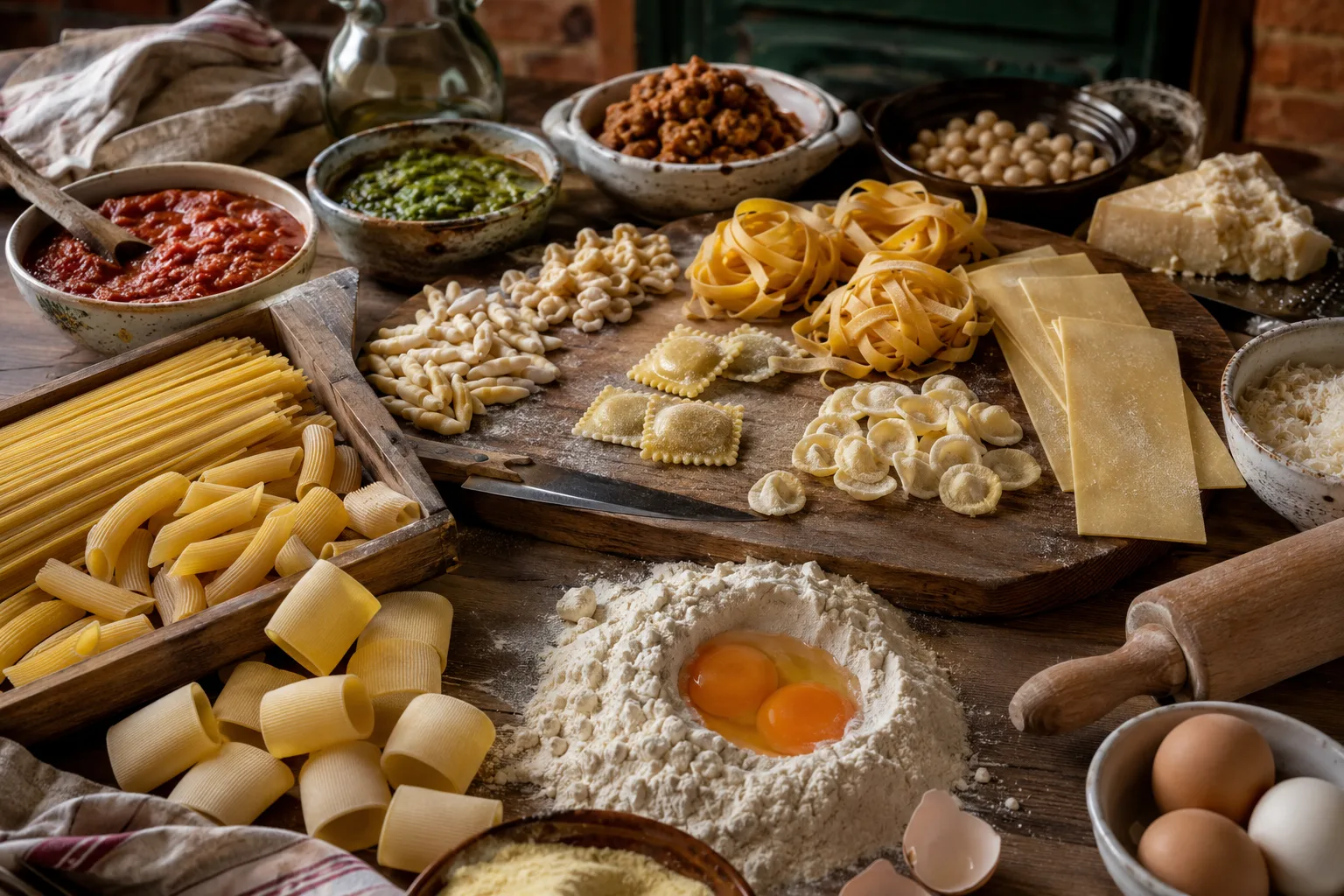
The very shape of pasta tells this story. Spaghetti, rigatoni, fusilli, pappardelle, orecchiette, trofie, tagliatelle or ravioli are shapes created to hold different sauces, adapt to different textures and work with local ingredients. A light sauce slides well over a spaghetti; a dense ragù binds better to a wide or rough pasta; a pesto needs a surface that can catch it; a filling requires a dough that can contain and protect it.
Behind every traditional pairing there is often a reason of texture, ingredient availability or local habit. A recipe is not just a name: it is a set of relationships between product, technique and context. The best-known Italian recipes are relatively easy to recognise and describe, but deep enough to offer new discoveries to anyone who decides to go beyond the surface.
Diaspora and the birth of a global cuisine
Italian cuisine did not conquer the world through a centralised plan or an advertising campaign. For a long time it travelled mainly with people. Between the nineteenth and twentieth centuries, millions of Italians left the peninsula to find work in the United States, Latin America, Northern Europe, Australia and many other parts of the world. With them travelled domestic habits, dish names, simplified recipes, small utensils, preservable products and the desire to recreate at least part of the home they had left behind.
At first, Italian restaurants abroad mainly served immigrant communities. They were places where you could speak the same language, meet people with similar experiences and find familiar flavours. Gradually, that cuisine began to attract people who were not Italian themselves.
Emanuela Scarpellini observes that the initial spread of Italian food was tied mainly to emigrant communities and long remained confined to their enclaves. The decisive shift came after the Second World War, when tourism, economic growth, the Made in Italy image and international interest in the Mediterranean diet turned Italian cooking into a desired model well beyond the communities of origin [4].
Italian-American cuisine, for instance, is a cuisine born from the encounter between emigrants, available ingredients, larger portions, urban rhythms and local tastes. Dishes such as chicken parmigiana, spaghetti with meatballs or rich versions of lasagna tell an American and Italian story together. They are recipes of the diaspora. They do not necessarily correspond to the tradition of a single Italian city, but they have a dignity of their own.
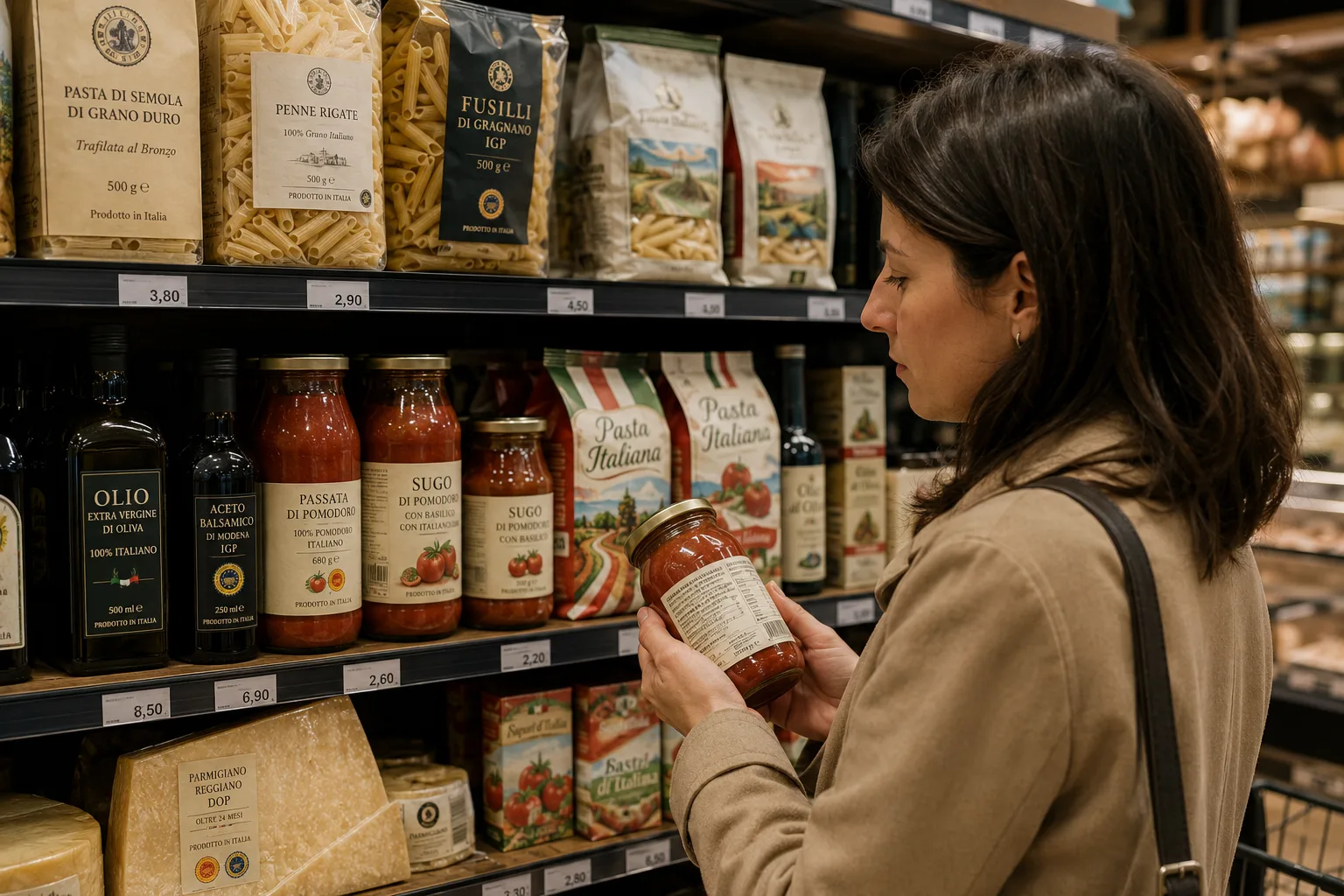
The problem arises when an adaptation is presented as the only authentic version of a dish, or when a product uses Italian flags, Italian names and stereotyped images without having any real connection to Italy. A diaspora recipe declares, even implicitly, that it was born elsewhere; a product of pure "Italian sounding" exploits the prestige of Italy without giving back value to the supply chains and territories that built that reputation. The global success of Italian cuisine rests on a dual capacity: keeping recognisable symbols while adapting to very different places and audiences.
Spaghetti Bolognese: the name and the taste
Spaghetti Bolognese is the best-known symbol of the misunderstandings between Italian and international cuisine. For many people abroad it represents Italy in an immediate way: a large plate of spaghetti, a red meat sauce and a generous sprinkling of cheese. For many people from Bologna, that dish provokes an almost automatic reaction, because it associates a very precise name with a transformed recipe.
Spaghetti with meat sauce can be a pleasant dish. The traditional ragù alla bolognese, however, has a different structure from the tomato-and-minced-meat sauce often served in international restaurants. The recipe updated by the Accademia Italiana della Cucina in 2023 includes coarsely minced beef, pancetta, celery, carrot, onion, wine and optional milk [5]. The result is a slow, intense, meat-rich condiment, not a liquid and very red sauce.
Because of this consistency, in the Bolognese tradition ragù is served mainly with egg tagliatelle, a wide and porous pasta that holds the sauce better. The Municipality of Bologna, in recognising some local specialities through the De.Co. label, explicitly referred to the link between Bolognese ragù and tagliatella [6].
The Italian criticism concerns the fact that, outside Italy, "Bolognese" has often become a generic term for any meat-and-tomato sauce. In this process, a city, a technique and a specific culinary history are lost. Spaghetti Bolognese is an international simplification born in diaspora restaurants and consolidated in the English-speaking world. It can be a legitimate dish in its own history. It would be more accurate, though, to consider it an international variant inspired by Italian ragù, not the exact picture of the Bolognese table.
In Italian cuisine, the pasta shape is as much a part of the recipe as the sauce ingredients.
Fettuccine Alfredo: a Roman recipe that became American
Fettuccine Alfredo shows that debates about authenticity are more complex than they seem. Alfredo exists. Fettuccine Alfredo was genuinely born in Rome and is still the signature dish of the Alfredo alla Scrofa restaurant, which presents it as a speciality that originated in its premises [7].
The most famous version outside Italy is very different from the original. In the Roman account, the dish is essential: fresh fettuccine, butter and Parmigiano Reggiano worked with great care until they form a creamy emulsion. No cream, flour, garlic, chicken or mushrooms is needed. The velvety texture comes from the emulsion of butter, cheese, pasta water and hot pasta, that is, from a precise technique rather than an accumulation of ingredients.
As Food & Wine recounts in an investigation into the dish's history, the Roman version was made of pasta, butter and Parmigiano, while the American sauce rich in cream and thickeners developed later to make the preparation more stable and suited to American restaurant tastes [8].
The American "Chicken Alfredo" is a dish of Italian-American cuisine, with its own identity and its own commercial history. For many Americans it is a comfort food: creamy, abundant, reassuring. The problem arises only when this version is described as the normal Roman lunch or as the only authentic form of Fettuccine Alfredo.
A recipe can have more than one life without one having to cancel out the other. The Roman Alfredo speaks of a cuisine based on emulsion, on the quality of butter and cheese, on texture control. The American Alfredo speaks of the evolution of a European dish within a more abundant, standardised, sauce-oriented restaurant culture. Both versions can be enjoyable, but they are not equivalent. The name of a dish carries a history, and knowing that history makes the dish in front of us more interesting.
Pineapple pizza is Canadian
Pineapple pizza is the most entertaining and misunderstood case in international food disputes. On social media it is often used as a kind of identity test: those who love it are free innovators unburdened by prejudice, those who hate it are rigid Italians incapable of accepting change.
The question becomes far more interesting if you abandon the ready-made joke. Hawaiian pizza was not born in Italy and, despite the name, was not born in Hawaii either. Its invention is credited to Sam Panopoulos, a Greek emigrant to Canada who first put canned pineapple and ham on the same pizza at his restaurant in Ontario in 1962. The name "Hawaiian" came from the brand of pineapple used, not from a Hawaiian culinary tradition [9].
Hawaiian pizza is a Canadian creation built on an Italian base and adapted to North American tastes, where the contrast between sweet and savoury was already present in other popular cuisines.
The reason many Italians view it with suspicion is not solely down to the pineapple. Italian cuisine often uses fruit in savoury preparations: pears and cheese, figs and prosciutto, pomegranate, honey and mostarda all appear in many local traditions. The criticism is mainly about the balance of the pizza. Canned pineapple is very sweet, releases water during cooking and alters the ratio between dough, tomato, cheese and savoury topping. For someone used to Neapolitan or Roman pizza, this can seem an unbalanced combination.
This is a critique of taste, not a moral verdict. Hawaiian pizza is a Canadian pizza of Italian inspiration, just as many Italian-American recipes are American with Italian roots. The art of the Neapolitan pizzaiuolo recognised by UNESCO concerns skills, dough, processing, cooking and the transmission of knowledge, not an unchangeable list of allowed toppings [10]. Pineapple does not erase that tradition. It simply is not part of it.
Adaptations and confusion
Spaghetti Bolognese, Fettuccine Alfredo and Hawaiian pizza are part of a broader process: when a cuisine spreads across the world, dishes change in size, ingredients, function and even meaning. Carbonara made with cream, for example, is widespread in many countries because cream makes it easier to achieve a creamy and stable sauce, especially in a professional kitchen where the dish must be repeated many times. The traditional Italian carbonara is made with guanciale, eggs, pecorino, pepper and pasta, without cream.
Chicken parmigiana is another example. It recalls melanzane alla parmigiana, breaded cutlets and cheese gratins, but it has taken on its own form in Italian-American cuisine. It is an American dish with a strong Italian root. The same goes for garlic bread, which may resemble seasoned bread, bruschetta or crostini, but belongs mainly to English-speaking restaurant culture.
These variants prove the opposite of what one might think: a cuisine is truly adopted when people start transforming it according to their own habits. A tradition unable to leave the place where it was born does not generate new versions; it remains confined. Italian cuisine had a remarkable strength precisely because it was desired, interpreted and rewritten in countless contexts.
The danger is confusion. A creamy carbonara can be good, but selling it as the traditional Roman version is misleading. Chicken parmigiana can be an excellent Italian-American dish, but it does not represent everyday Italian cuisine. A product with a name like "Parmesan", "Bologna sauce" or "Italian-style salami" may evoke Italy without having an actual relationship with Italian territories and supply chains.
The distinction between Italian cuisine, diaspora cuisine and simple "Italian sounding" helps to tell things honestly. Diaspora recipes deserve respect because they speak of migration, labour and adaptation. Local recipes deserve respect because they tell of territories and communities. Deceptive marketing deserves more critical attention, because it exploits a reputation built by others without sharing either its economic or its cultural value.
Food, memory and identity
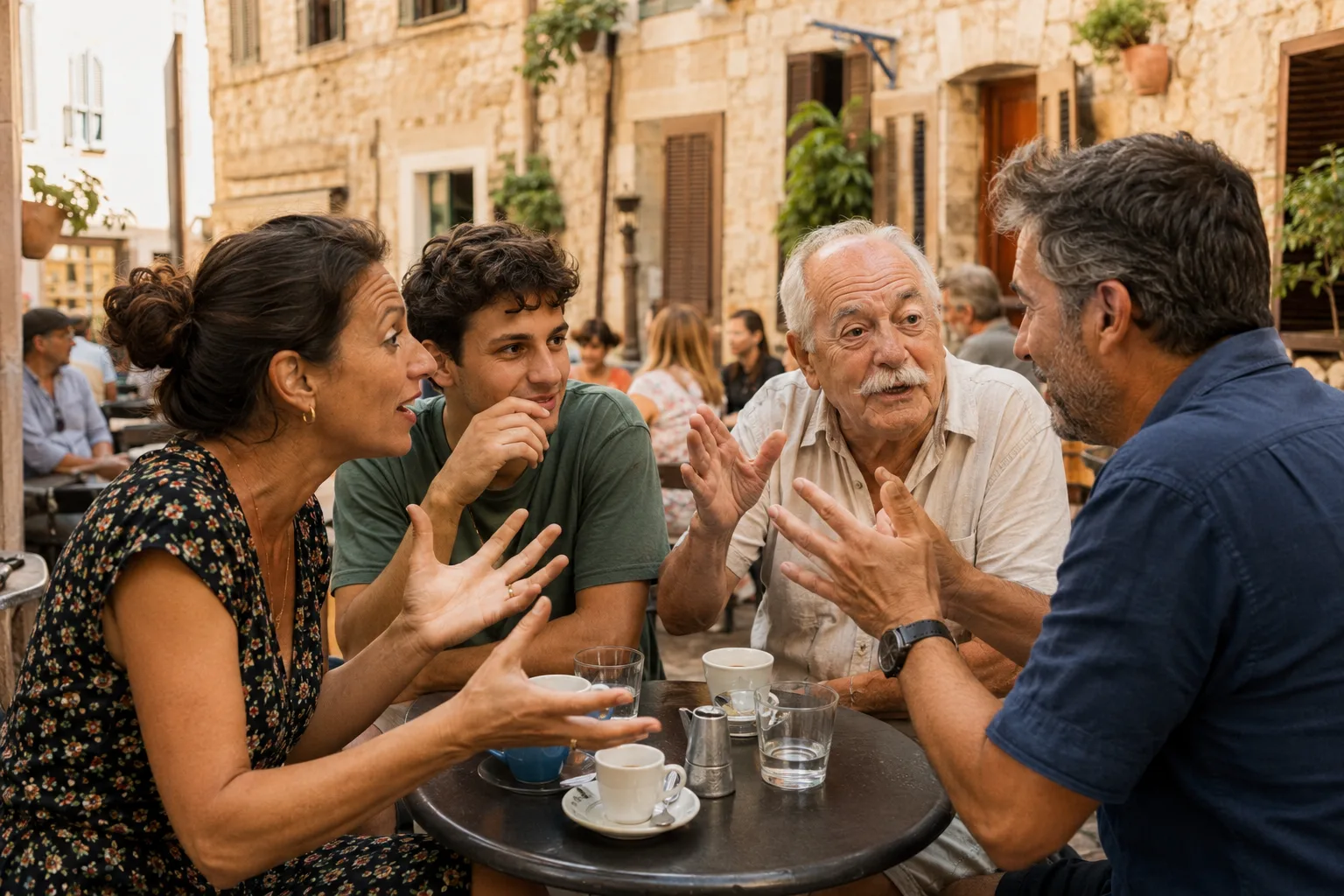
For many Italians, the relationship with food is a social grammar learned often without realising it. You learn which dish is prepared on Sunday, which sweet belongs to a festival, when certain vegetables are eaten, which pasta is considered overcooked, how to welcome a guest and how much it matters to have something to share even on an ordinary day.
No Italian family is identical to another, and it would be wrong to imagine a perfectly homogeneous culture. Food, however, remains one of the most frequent ways Italians describe people. "My grandmother used to make this sauce", "that cheese came from my father's village", "we only ate this cake at Christmas" are phrases that turn a recipe into an archive of memories. Food preserves dialect words, gestures, utensils, cooking times and small family rules that rarely make it into a cookbook.
The formula "quanto basta" (to taste), so typical of Italian home cooking, says much more than an imprecise quantity: it indicates a knowledge built through experience, observation and repetition. Many Italians react emotionally to a carbonara made with cream or a cappuccino ordered after lunch. They are often protecting a gesture learned in the family or in a specific place.
UNESCO describes Italian cuisine as a cultural practice in which knowledge is transmitted, reworked and shared across generations [1]. The Mediterranean diet is recognised as a set of practices in which the shared meal strengthens the identity and continuity of communities [2].
Someone who walks into a good Italian restaurant is not just seeking calories. They are often looking for an atmosphere: a table without too much formality, a dish to share, a long dinner, a flavour that seems to have a story. This capacity to hold the everyday and memory together is what makes Italian food so universal. It does not promise unattainable perfection. It promises something simpler and perhaps stronger: a pleasure that can be shared.
Tradition and economics
Italian cuisine is also a vast economic asset. Behind a famous dish there are farmers, producers, consortia and entire territories. The DOP, IGP and STG designations (Protected Designation of Origin, Protected Geographical Indication, Traditional Speciality Guaranteed) protect a concrete relationship between a product, a place, a technique and a supply chain.
According to the Ismea-Qualivita Report, in 2023 the Italian system of DOP and IGP productions reached 20.2 billion euros in production value [11]. In the first eleven months of 2025, Italian exports of food products, beverages and tobacco grew by 4.3% compared to the same period the previous year [12].
When a product uses an Italian name, evokes a famous designation or exploits the colours and symbols of Made in Italy, the value built by those who genuinely produce in Italy comes into play. Defending this value, however, should not mean freezing all evolution. Italian cuisine has always changed. It changed when it embraced the tomato, when it turned rice into risotto, when it adapted ingredients from other parts of the world, and when emigrant families reinvented recipes in Argentina, the United States, Germany or Australia.
The strongest tradition knows how to distinguish between a declared variant and a confused imitation. Spaghetti Bolognese, Chicken Alfredo and Hawaiian pizza can continue to exist, be sold and please millions of people. They must not, however, erase tagliatelle al ragù, Roman fettuccine with butter and Parmigiano, or the art of Neapolitan pizza.
Telling the story of Italian cuisine well means looking beyond the fame of pizza and pasta. Behind every dish there are people, places, gestures and stories. This depth explains why Italian cuisine keeps speaking to the whole world.
Bibliography
Discussion
Join discussion!
There are already 0 comments on this article in the forum.