
Premium Content
This article is reserved for Premium subscribers. Log in or subscribe to read the full content.



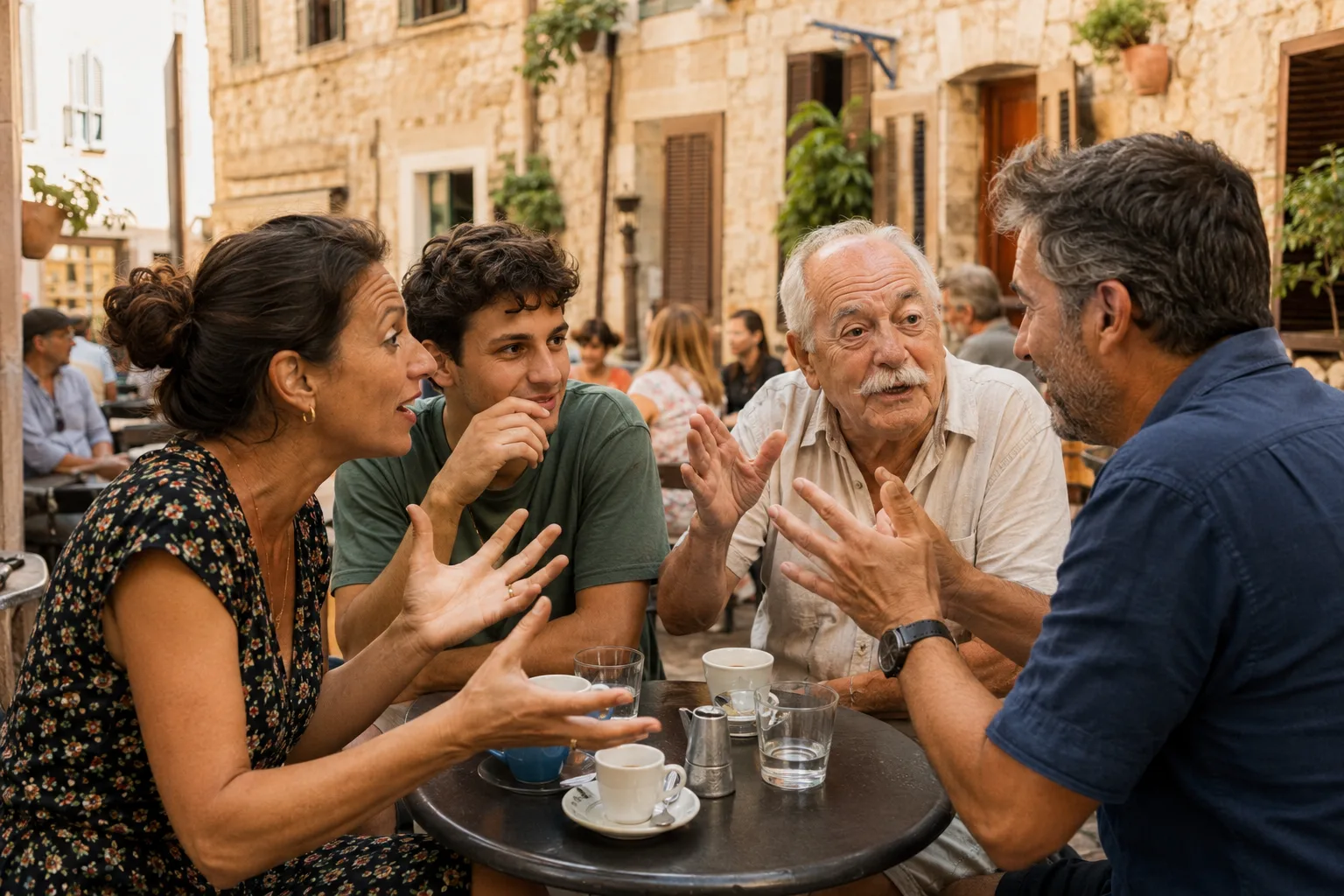
In Italy, conversation rarely travels through words alone. Common Italian lives alongside local cadences, dialects, minority languages and family repertoires shaped by migration. Voice, hands, distance and eye contact also change what a sentence conveys. This plurality still helps people create familiarity, irony, respect or conflict.
This article is reserved for Premium subscribers. Log in or subscribe to read the full content.
The best choice to save money with a single annual payment. Cancel anytime.
Recurring payment every month, completely automatic. Cancel anytime.


 Free
Free





We use cookies and similar technologies to keep the website secure and fully functional. With your consent, we also use analytics cookies to understand traffic and improve the website.
Required for security, navigation, language selection and consent storage. Always active.
Allows privacy-respectful traffic measurement through Google Analytics 4 after your consent.
Discussion
Join discussion!
There are already 0 comments on this article in the forum.