Claudio Monteverdi holds a decisive place in this history, although he need not be cast as the lone inventor of a genre. L’Orfeo, performed in Mantua in 1607 to a text by Alessandro Striggio, showed how music could carry a story forward and then hold it on a moment of grief, doubt or love. Late in his life, L’incoronazione di Poppea, staged in Venice in 1643, brought musical theatre closer to characters driven by desire, calculation, power and ambition. Monteverdi worked alongside many other writers, poets and singers. Among them was Francesca Caccini, singer and composer at the Medici court, who presented La liberazione di Ruggiero dall’isola d’Alcina in 1625, a stage work made of music, words, dance and courtly spectacle. Opera was already an expensive, visual and collective theatrical enterprise, inseparable from the society that produced it.[2] [5]
Cities in competition
Speaking of Italian opera in the singular is convenient, but its history looks far more like a network of cities than a national project. Florence and Mantua were centres of aristocratic experiment; Rome developed spectacles tied to great families, the Church and court ceremony; Venice changed the rules; Naples became a powerhouse of musical education and vocal training; Milan turned opera into a centre of production, publishing and international prestige. Parma, Bologna, Turin, Palermo and dozens of smaller cities completed the circuit through seasons, companies, skilled workers and local audiences. Each centre had its own theatres, rules, capital and taste. An opera could acquire different singers, arias, scenery and even changes to the plot as it moved from one city to another.
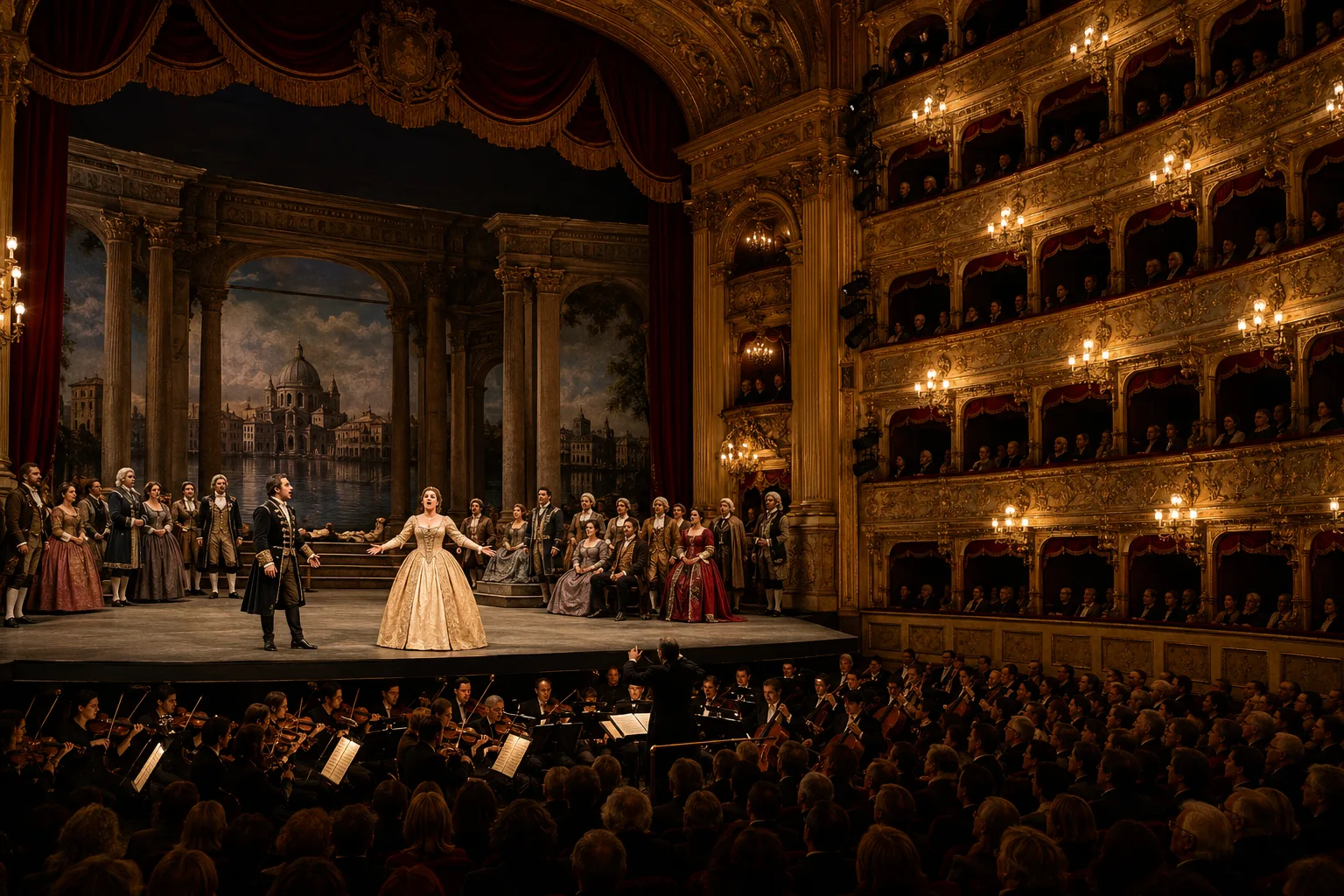
The most visible shift came in Venice in 1637, when the Teatro San Cassiano opened. For the first time, an opera house welcomed a paying audience: melodrama left palaces and private occasions to enter a market shaped by tickets, seasons, competition and the reputations of performers. Francesco Manelli’s Andromeda, to a libretto by Benedetto Ferrari, inaugurated that model. Social divisions remained sharp, since seats and boxes carried different prices and functions, but opera now also depended on the interest of people buying tickets. The impresario had to persuade audiences to return; the composer had to write for particular voices; the librettist had to offer a story capable of holding attention. From Venice, this productive model travelled quickly through Italy and Europe.[3]
Voice, verse, breath
An Italian aria can seem immediate: a clear melodic phrase, a recognisable feeling, a few words that remain in the mind. Behind that apparent ease lie vocal technique, pronunciation, breathing, verbal articulation, the relationship with the orchestra and stage presence. Recitative carries the action forward through a mode of singing close to speech; the aria concentrates an emotion, slows dramatic time and allows a character to voice fear, desire, rage or hope. A libretto is more than a plot summary. It is poetry written to be sung, with metre, rhyme, pauses and stresses that guide the composer. This is why writers such as Pietro Metastasio, Arrigo Boito, Felice Romani, Francesco Maria Piave, Giuseppe Adami and Renato Simoni have a proper place in opera history, even though their names often remain behind those of the composers.[13]
Voice types help distribute roles, colours and conflicts. The soprano is often associated with figures exposed to intense feeling; the mezzo-soprano may bring darker colours and ambiguous parts; the contralto works in a rare, low register. The tenor carries many amorous or heroic lines, while baritone and bass can bring authority, menace, irony or grief. These are theatrical tools rather than fixed narrative cages. Bel canto, a term often applied indiscriminately to all Italian opera, more precisely identifies a technical and stylistic tradition central to the eighteenth and early nineteenth centuries, built on legato, agility, breath control and ornament. In 2023 UNESCO inscribed the practice of opera singing in Italy on its Representative List of the Intangible Cultural Heritage of Humanity. The recognition concerns a vocal and pedagogical practice able to project sound in acoustic spaces without amplification, together with gesture, acting and stage life. It does not cover the entire operatic repertoire as an undifferentiated category.[4]
A theatrical industry
Opera has always required money, organisation and specialised labour. Behind the composer stood copyists preparing parts, orchestral players, choristers, stagehands, set designers, costume makers, carpenters, painters, répétiteurs and front-of-house staff. The impresario chose the programme, hired singers, met expenses and took substantial financial risks. Singing stars could shape the writing itself: a celebrated singer wanted an aria suited to her agility, a tenor had certain notes and not others, a local audience had preferences no one could disregard. The theatre was also a place for meetings, business, fashion, political connections and social observation. Taking a box meant more than watching a performance; it meant being seen, receiving guests and discussing the city.
In the nineteenth century, music publishing made this system broader still. Casa Ricordi, founded in Milan in 1808, did more than print scores: it managed contracts, promoted authors, circulated piano-and-vocal reductions, and kept proofs, letters, libretti, costume designs and stage materials. An opera could therefore leave the theatre and reach homes, salons, singing schools and distant cities. Piano reductions allowed people to know melodies and scenes without an entire orchestra in front of them. Verdi’s and Puccini’s fame was built partly through this publishing work, where commercial interest met artistic standards. When we say that Italian opera conquered the world, we are talking about a form of theatre exported with its scores, voices, images and ways of organising production.[7]
Changing styles
The history of Italian opera does not move in an orderly line from Monteverdi to Puccini. Genres coexist, overlap, are corrected and sometimes mocked. In the seventeenth century, recitar cantando sought a balance between text and sound; in the eighteenth century, opera seria gave a central place to arias, Metastasian libretti and the prestige of singers. Opera buffa developed quicker rhythms, everyday characters, misunderstandings, dialects and social tensions treated with irony. Naples was one of the great laboratories of this period, thanks to its conservatories and the circulation of composers and performers. Pergolesi, Paisiello, Cimarosa and many others worked in a system where audiences recognised familiar conventions yet expected novelty, comedy and voices able to surprise them.
In the early nineteenth century, Rossini, Bellini and Donizetti changed the relationship between voice, orchestra and dramatic construction. Rossini relied on rhythmic drive, ensembles and orchestral writing that gave theatre momentum and precision; Bellini worked through long, tense vocal lines; Donizetti moved between comedy, melancholy and theatrical violence with striking speed. Verdi made musical action increasingly taut, while the verismo of Mascagni and Leoncavallo sought recognisable social settings, direct passions and everyday tensions. Puccini brought psychological detail, orchestral colour and stage rhythm towards a modernity in dialogue with the novel, photography, journalism and early cinema. Italian musical theatre did not stop in the twentieth century: composers such as Luigi Dallapiccola, Luigi Nono, Luciano Berio and Salvatore Sciarrino continued to challenge form, language and the relationship between audience, voice and technology.[8] [12]
Monteverdi and Rossini
Monteverdi’s L’Orfeo is not the story of a romantic lover in the modern sense. Orpheus tries to defeat death through singing, but discovers that music can move, persuade and suspend pain while still failing before human limits. Monteverdi alternates recitative, dance, chorus and instrumental writing to shift the emotional weight of the scene continually. In L’incoronazione di Poppea, by contrast, Roman antiquity becomes a matter of power: Nero and Poppaea are not exemplary moral figures but people driven by desire, calculation, jealousy and fragile alliances. It is less a theatre of celebration than one might expect from an age of courts. Music does not decorate its characters; it makes them contradictory, exposed and dangerous.[2]
With Rossini, theatre changes speed. Il barbiere di Siviglia, first performed in Rome in 1816, remains associated with lightness and comedy, yet its force depends on an almost mathematical control of stage energy. One character speaks, another cuts in, the orchestra speeds up, ensembles pile voices and situations together until they produce perfectly organised disorder. The famous Rossinian crescendo is not merely a dazzling effect: it increases pressure in the scene and brings the audience close to the characters’ confusion. Rossini renewed melodic breathing, rhythmic impulse, vocal writing and orchestration. To reduce him to a few popular arias or to comedy alone is to lose sight of a composer who also worked in opera seria, historical drama and large orchestral structures.[8]
Verdi and Puccini
Giuseppe Verdi is often captured in a quick formula: the composer of the Risorgimento, author of Nabucco and of a chorus turned into a national emblem. There is some truth in this, but it simplifies too much. Va, pensiero spoke to audiences who could recognise in the exiled Hebrew people an image of longing and oppression; over time, the piece acquired increasingly powerful patriotic associations. Musicological research has nevertheless warned against treating every Verdi success of 1842 as an immediate political manifesto, or the chorus as an automatic anthem of Italian unity. Verdi was first and foremost a man of theatre: in Rigoletto, La traviata and Otello, conflict grows within families, relations of power, money, inequality, sexuality and violence. Piave and Boito were decisive collaborators, not mere suppliers of words.[9] [10]
Puccini inherited that attention to drama and adapted it to another age. In La bohème, a cold room, unpaid rent and a candle are enough to build a world; in Tosca, political power works through interrogations, blackmail and fear; in Madama Butterfly, private feeling collides with international relations marked by inequality and colonialism. His global fame rests on memorable melodies, but also on the ability to turn the smallest gesture into stage tension. Turandot remains a special case: Puccini died leaving the opera unfinished, and its premiere at La Scala on 25 April 1926 was conducted by Arturo Toscanini. That night the performance stopped at the point where the composer had stopped writing. The detail itself describes opera as a living art: a score can remain open, generate different endings and compel those staging it to decide how it should be heard.[11]
A country before the country
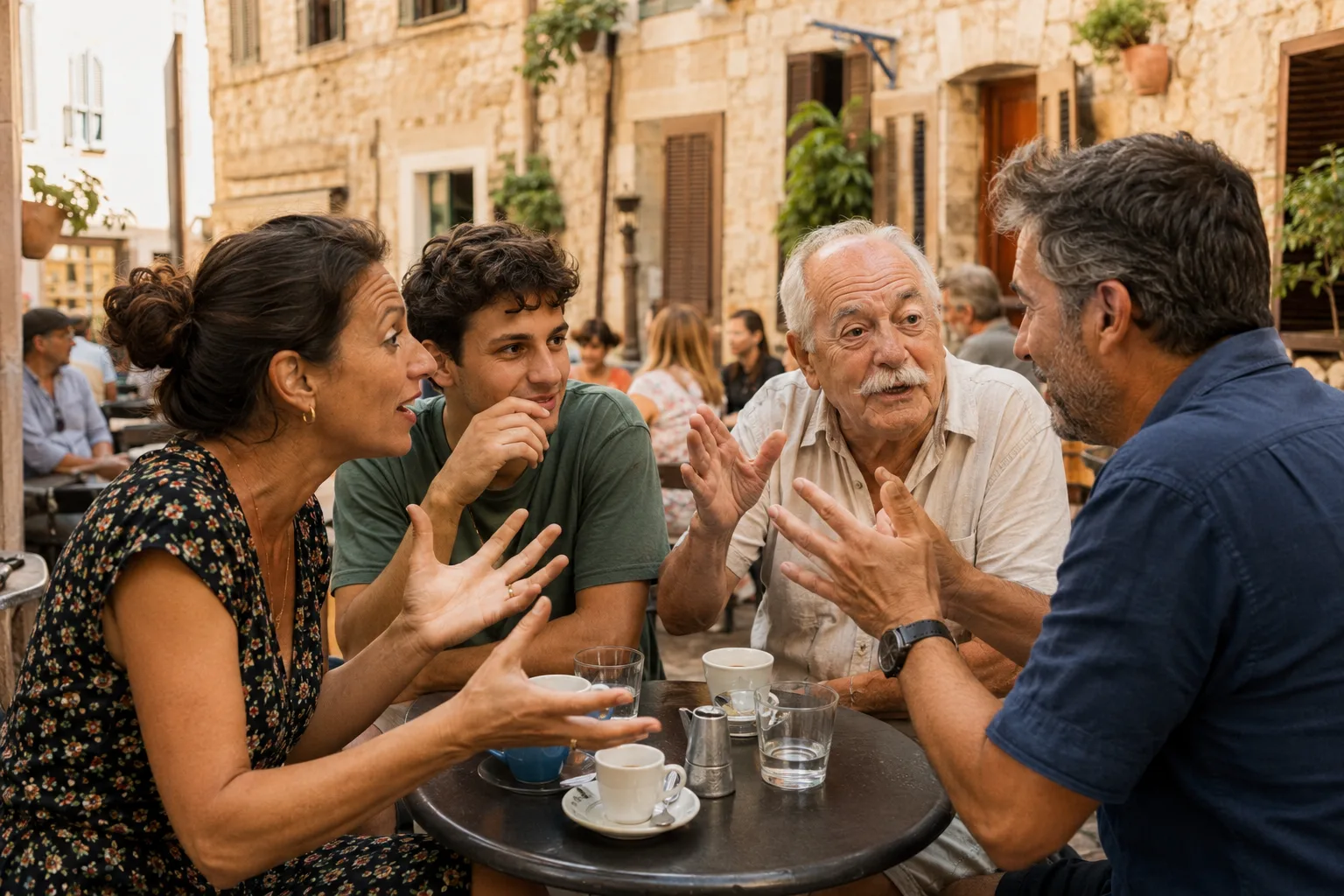
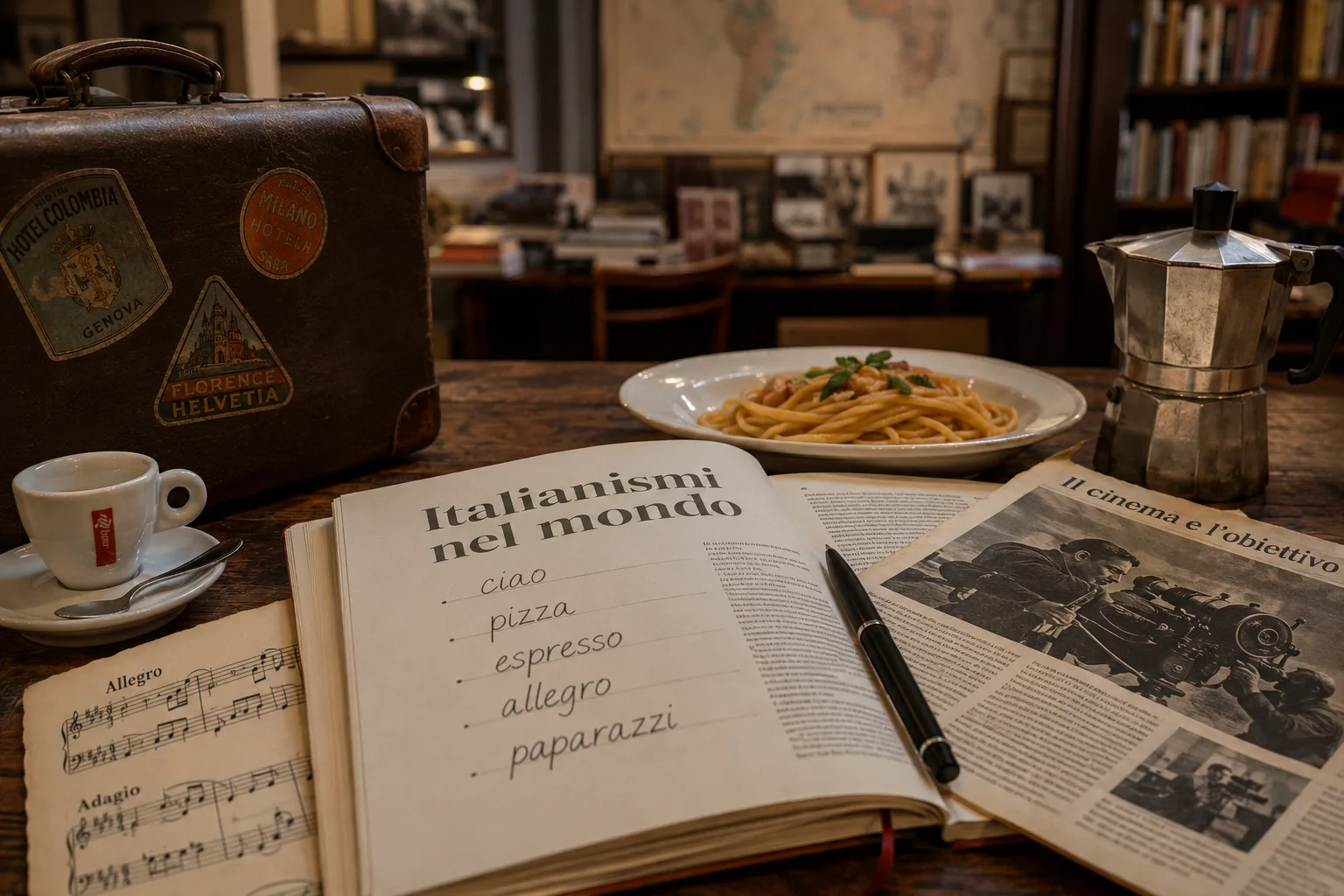
Opera helped to build a shared emotional language when Italy was not yet a unified state. People did not all speak the same Italian, have the same education or move through the same social spaces. Yet arias, choruses, printed libretti, travelling companies and theatrical reports circulated between different cities and territories. Italian terms such as aria, bravo, libretto, cabaletta and opera entered many European languages.[6] The language of melodrama carried cultural weight beyond the audience of major evenings: its formulas reached conversation, print, popular memory and music performed outside theatres.[14]
It would be wrong, however, to turn opera into a national rite experienced by everyone in the same way. Theatres were marked by economic and social difference; private boxes, stalls, galleries and popular areas offered sharply different experiences. The San Cassiano was open to those who could pay for a ticket, but that did not make it democratic in the modern sense. The relationship between opera and the public remained complex in the nineteenth century too: some titles travelled very widely, while others stayed closer to educated audiences, cultural capitals or urban elites. The Italian identity shaped by opera is therefore a story of encounters and exclusions, shared phrases and material barriers. That complexity helps explain why melodrama proved so powerful: it did not address a community already united; it helped people imagine one.[3] [10]
Beyond the relic
Italian opera now lives with an obvious contradiction. Theatres around the world continue to stage Verdi, Puccini, Rossini, Donizetti and Monteverdi; young singers come to Italy to study repertoire and technique; archives, costumes, scenery and manuscripts demand conservation and specialist care. At the same time, many theatres struggle to reach new audiences, prices can deter part of the public, and programmes often concentrate on a narrow set of safe titles. A repertoire reduced to La traviata, Carmen, Tosca and Il barbiere di Siviglia keeps familiarity alive but can push aside lesser-known works, contemporary composers and unexpected theatrical possibilities. Opera does not need to be treated as an untouchable museum: every new performance involves translation, choice, interpretation, casting and artistic responsibility.
Its ability to speak to the present depends on the very combination that made it international before Italian unification: words, voice, theatre, technical labour and audience. Desire, loss, money, jealousy, war, ambition, violence and care meet in an opera. Costumes change, productions change, and so do the sensitivities through which we look at characters; what remains is the singer’s breath, the gesture of a conductor, the pause before an entrance and the expectancy of a whole auditorium. When a voice faces a theatre without a microphone, the past does not return unchanged. It is placed at stake again, each time, before people who still have to decide what they are hearing.[4] [12]
Bibliography






Discussion
Join discussion!
There are already 0 comments on this article in the forum.