

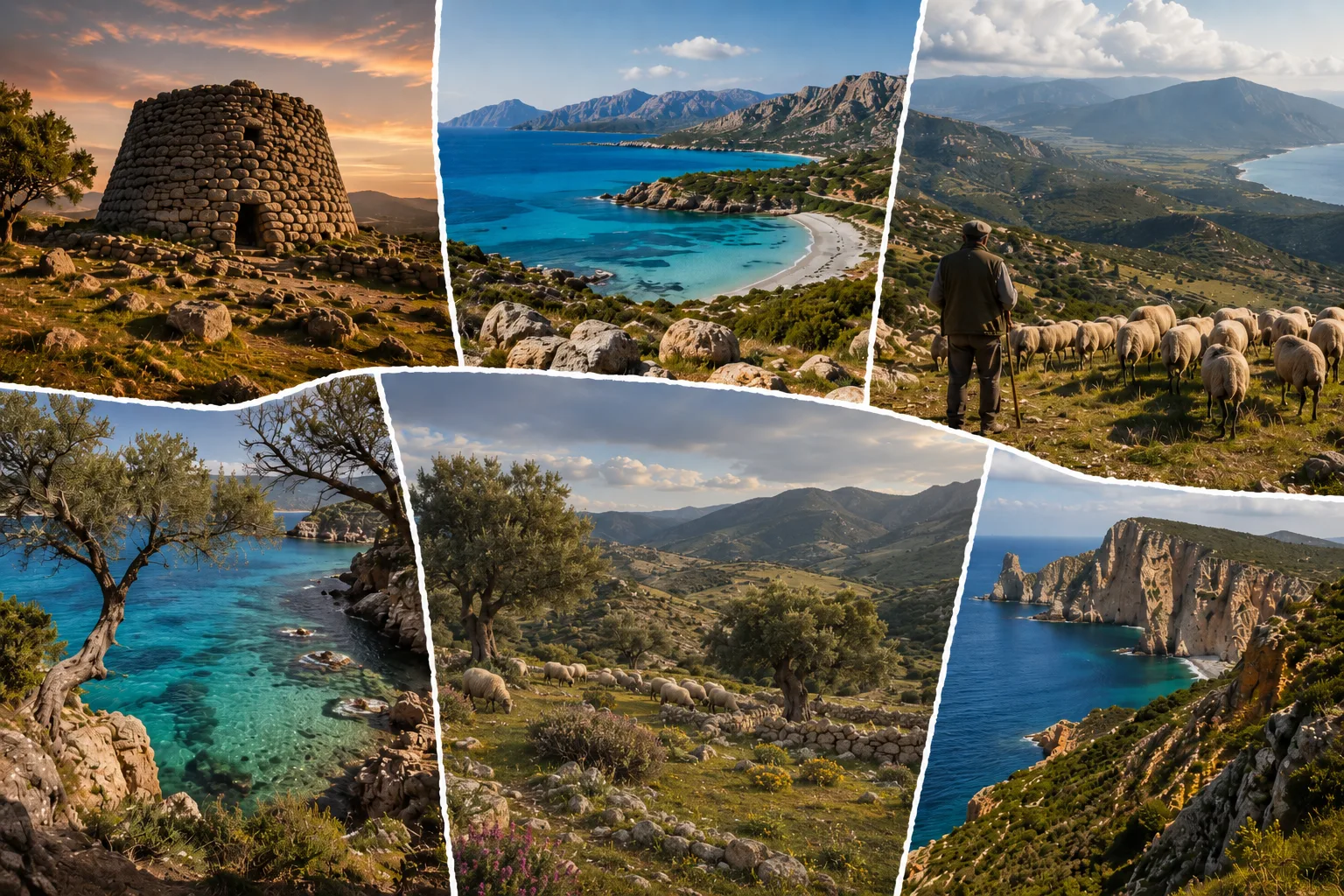
Sardinian landscape with a coastal road, mountain ridges and an inland town, illustrating the distance between sea and inner valleys
Credits: Image generated with AI technology

Sardinia: Why It Feels Like an Island Within an Island

Sardinia has been linked to the Mediterranean for millennia, yet mountains, plateaux and valleys have made its interior a collection of distinct territories. Its identity grows from the meeting of outward connections and local distance: port cities, mountain towns, languages, economies and memories ...
Read more
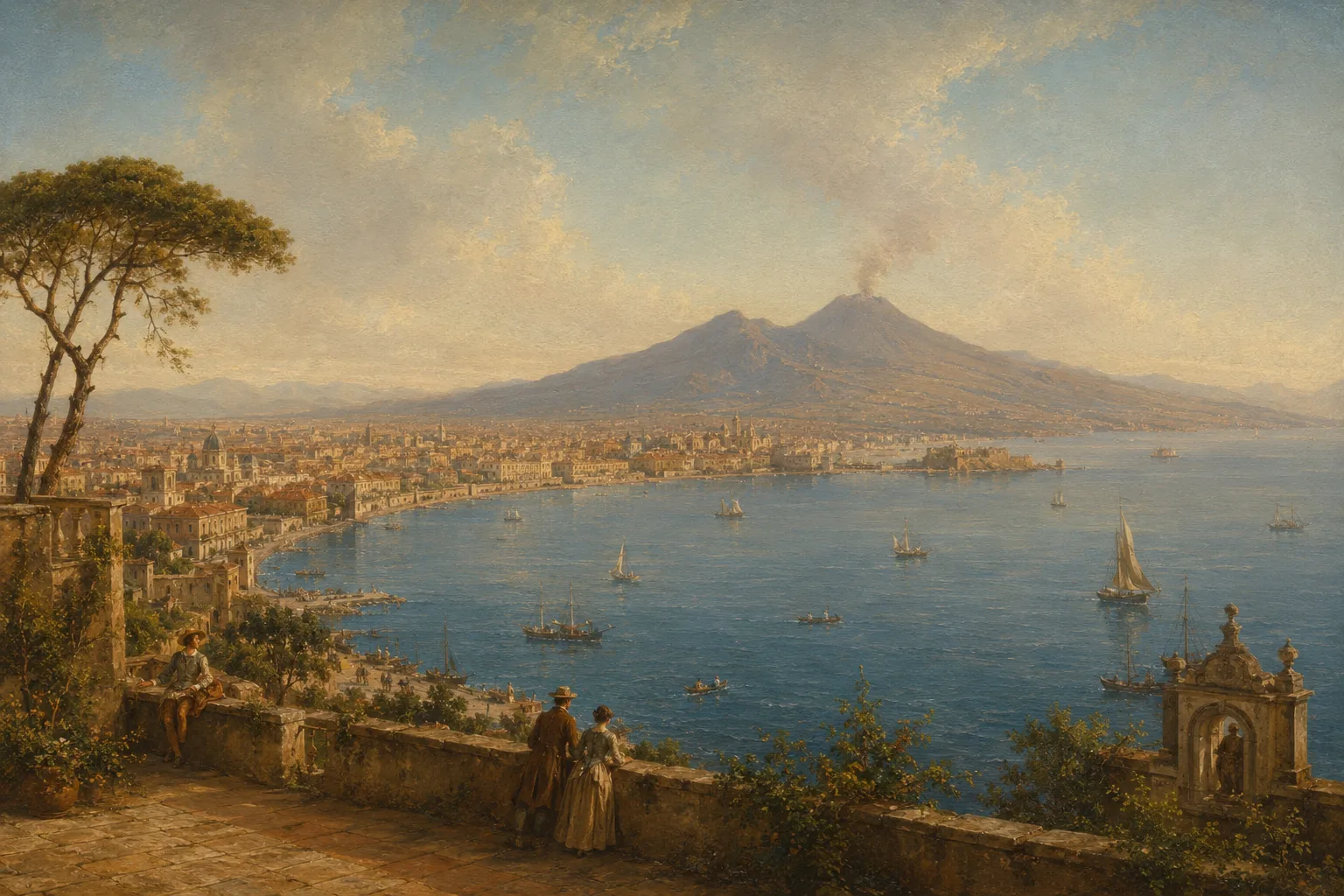
Realistic view of the Gulf of Naples with Vesuvius, the port, hills and the city built along the coast.
Credits: Image generated with AI technology

Naples Between Volcano and Sea: How Geography Explains Part of Its Character

Naples is often explained through quick images: Vesuvius, the sea, the energy of the street. Its urban history is more concrete and more revealing. The gulf, port, hills, volcanic soils, population density and daily coexistence with risk have shaped growth, trade, mobility and the use of space. Geog...
Read more
A compact historic Italian village on a hill, with stone houses, a tower, fields below and a winding access road
Credits: Image generated with AI technology

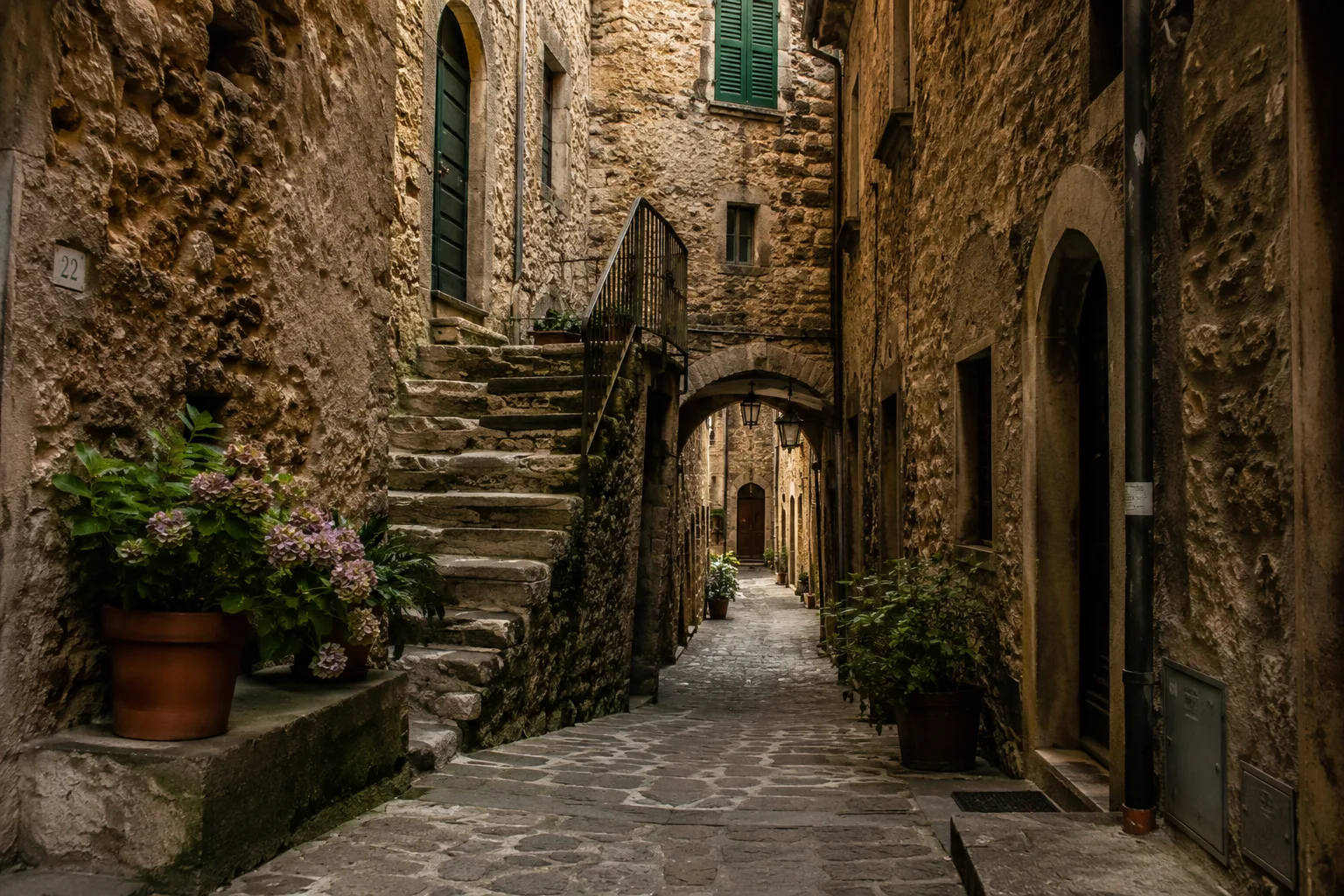
Why Italy Has So Many Historic Villages: Geography, Defence and Rural Depopulation

Italy’s historic villages were not built to look picturesque. They emerged from geography, security, farming, medieval power and routes of communication. Many lost residents during the twentieth century; today some are seeking a new role between tourism, distant services and environmental vulnerabil...
Read more
Physical map of Italy showing the Alps, the Po Valley, the Apennines, the coasts, Sicily and Sardinia.
Credits: Image generated with AI technology

Why Italy Is So Long and Narrow: How Geography Divided and United the Country

How can a country only a little over a thousand kilometres long contain so many different Italies? The answer begins with the physical map. The Alps, the Po Valley, the Apennines, the seas and the islands made some connections easy and others difficult. Geography did not create Italian history or re...
Read more
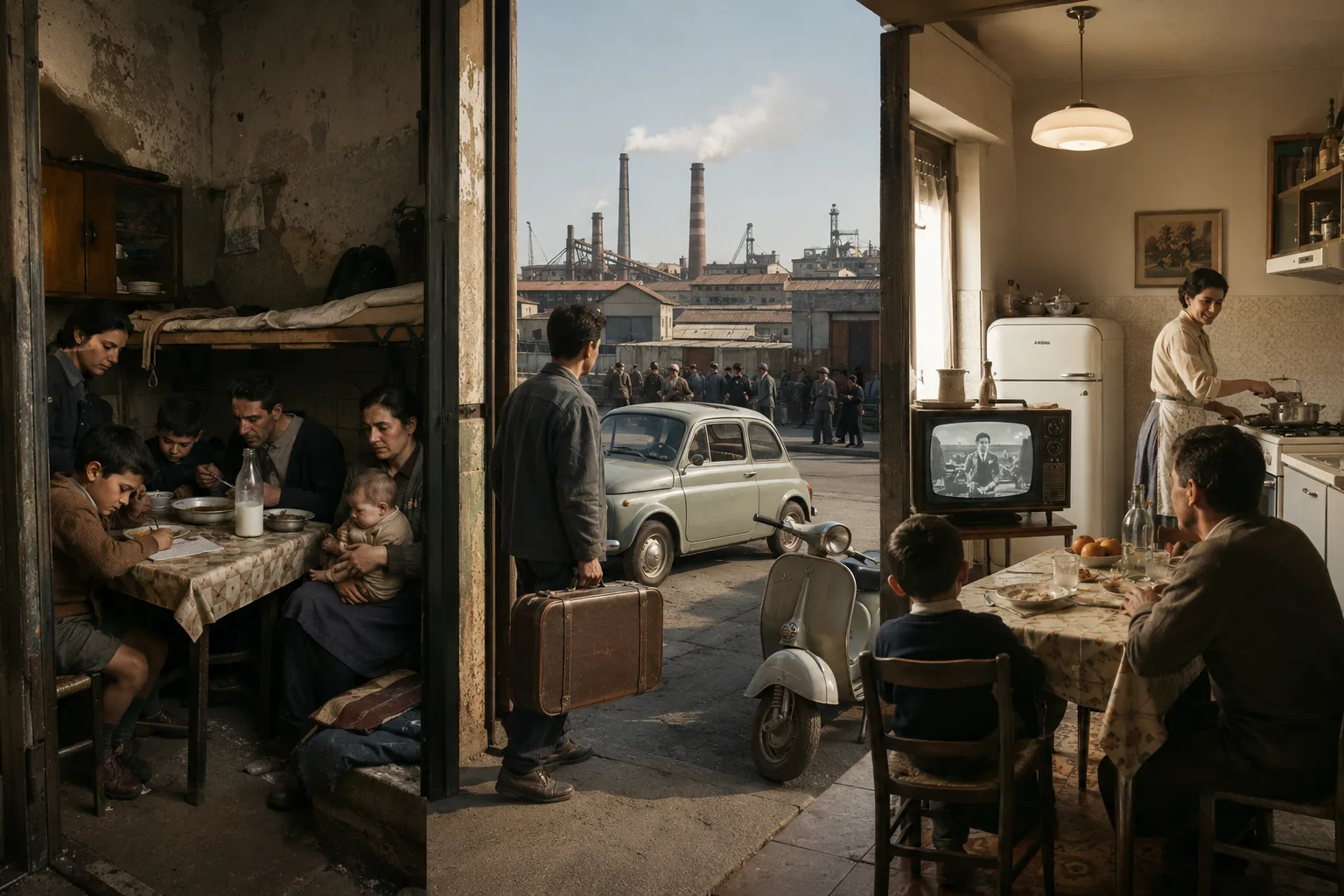
Italian worker in the 1960s beside a Fiat 500, with a factory and an urban suburb in the background
Credits: Image generated with AI technology

Italy’s Economic Miracle: How a Poor Country Became an Industrial Power

In little more than a decade, Italy moved from post-war reconstruction and widespread poverty to rapid industrialisation. The so-called economic miracle grew out of international aid, European integration, public and private investment, and vast internal migration. It changed consumption, cities and...
Read more
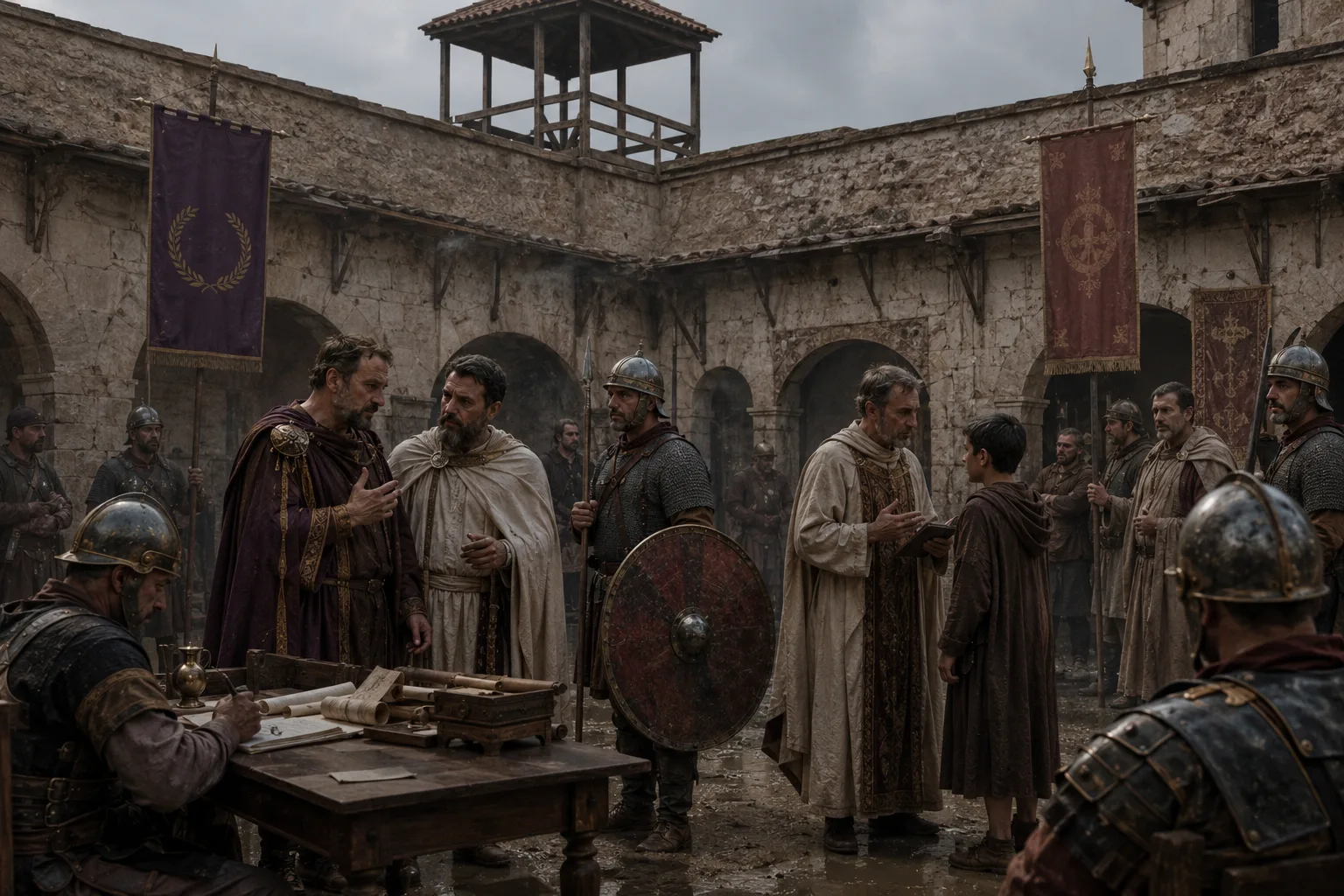
Realistic view of late antique Ravenna, with a Roman official, a senator and soldiers in fifth-century dress
Credits: Image generated with AI technology

Rome Did Not Fall in a Day: What Really Happened at the End of the Western Roman Empire

The year 476 marked the deposition of Romulus Augustulus and the end of the Western Roman emperor resident in Italy, not the instant disappearance of Rome. Imperial power had already been weakened by fiscal problems, lost provinces, war and internal struggles. Under Odoacer and after him, Roman law,...
Read more
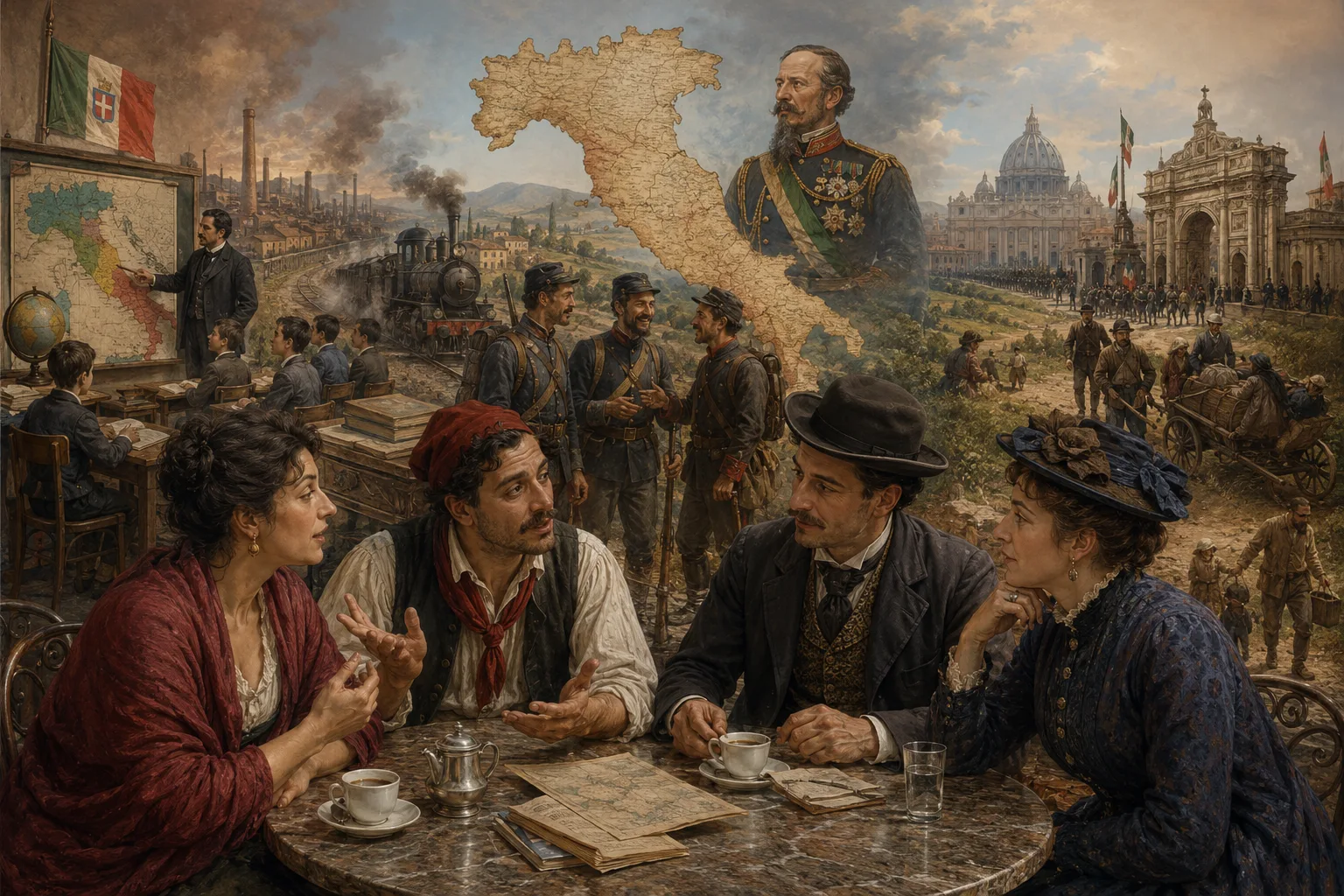
Symbolic view of Italy linking Turin, Rome, Naples, Milan and Trieste through railway lines, local scenes and historical maps
Credits: Image generated with AI technology

Why Italy Became a State Only in 1861 — and Still Does Not Feel Like a Single Country

Italy existed long before 1861 as a geographical space and a cultural civilisation, but not as a single state. Political unification created a kingdom, not an instant national community. Language, school, migration, the Church, regional inequalities and local loyalties all shaped a slower and unfini...
Read more
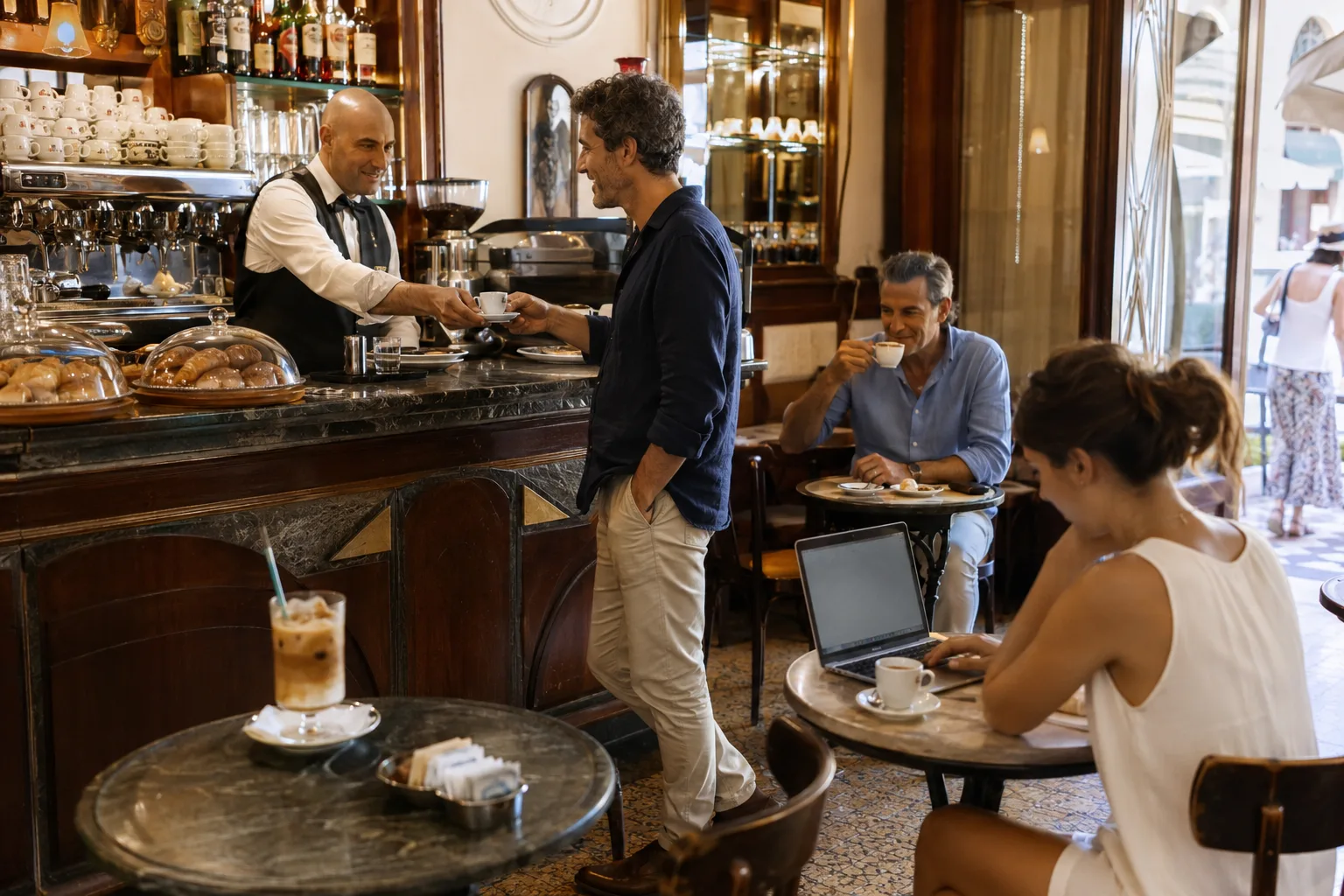
Counter of an Italian café with espresso cups, cappuccinos and customers during a coffee break
Credits: Image generated with AI technology

The Italian coffee rules Italians do not always follow

Abroad, Italians are often portrayed as uncompromising about coffee: espresso without sugar, cappuccino only in the morning, a cup drunk standing at the bar. Everyday habits are more flexible. Between moka pots, capsules, afternoon cappuccinos, local vocabularies and work breaks, coffee remains a re...
Read more
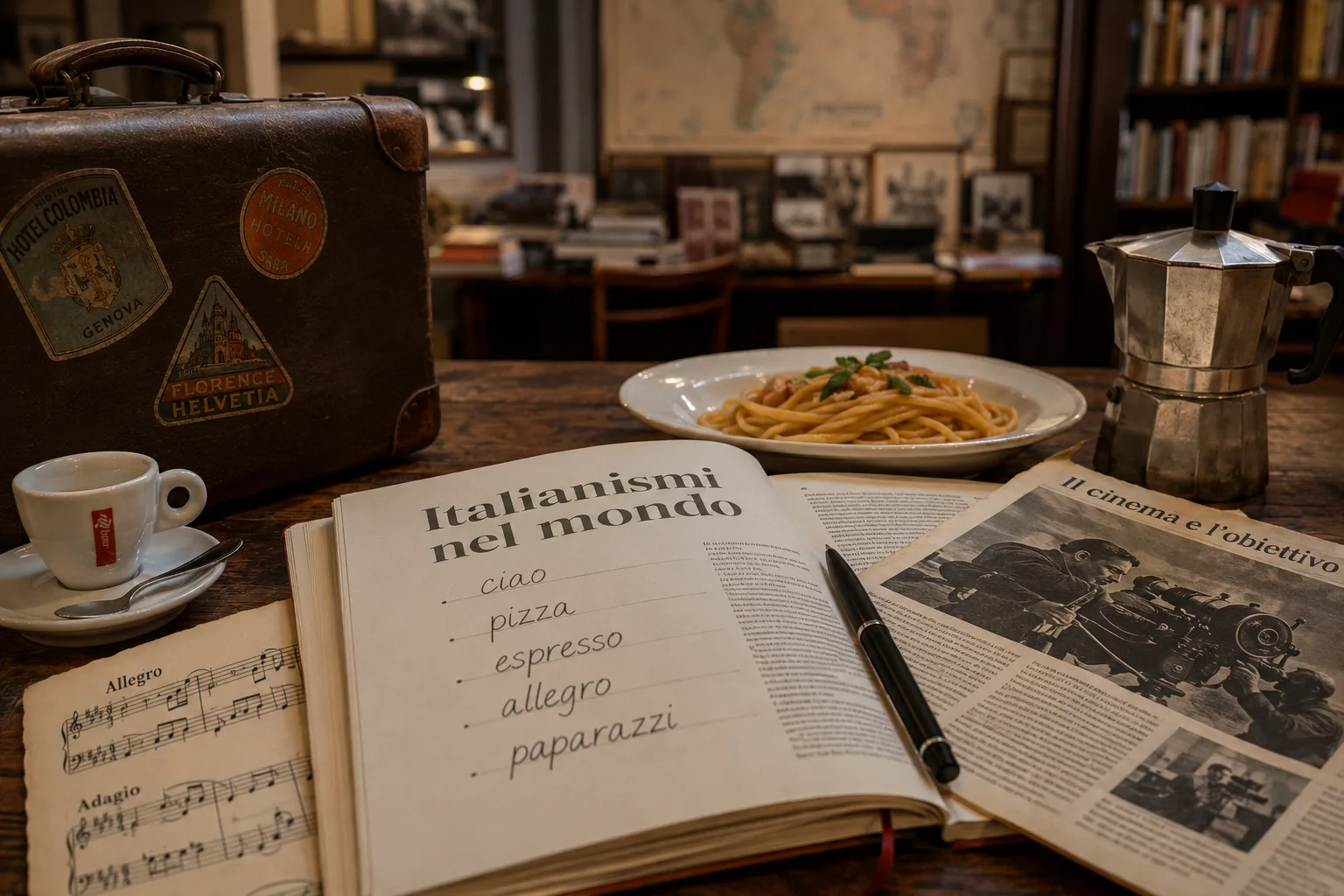
Open musical score beside an espresso, a notebook with the word ciao and newspaper clippings about paparazzi
Credits: Image generated with AI technology

Italianisms Around the World: The Words That Travel with Italy

Pizza, allegro, ciao, paparazzi, espresso: Italian words adopted by other languages tell of trade routes, musical scores, migration, films and advertising. Some retain almost all their original meaning; others alter their pronunciation, grammar and use. Following these linguistic borrowings reveals ...
Read more
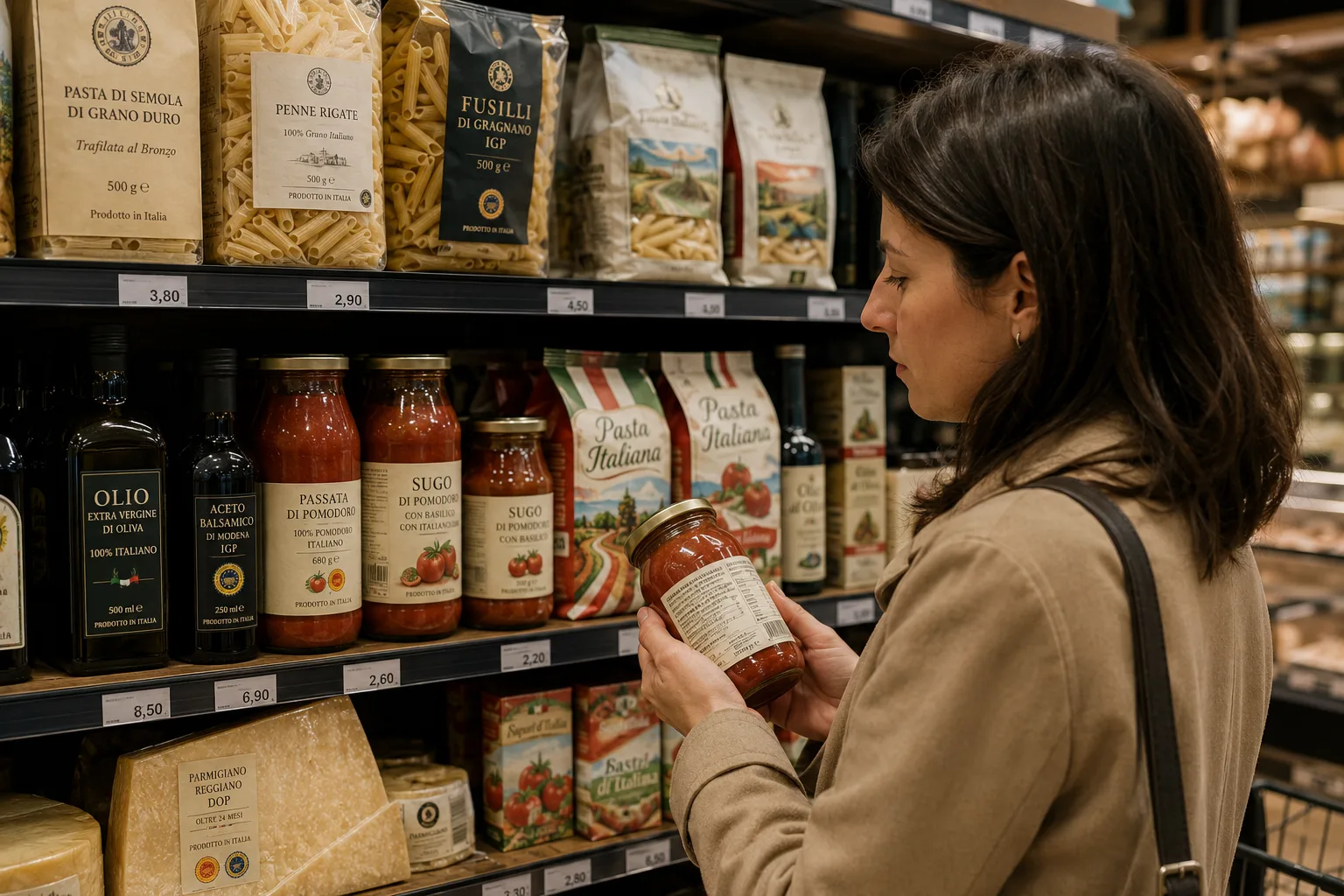
Supermarket shelf with Italian food products, readable labels and a hand checking the back of a packet
Credits: Image generated with AI technology

How to recognise a genuine Italian product abroad: a practical guide beyond Italian sounding

Italian food is often recognised before it is tasted: an Italian name, the tricolour, a village square, a bottle that suggests wine or olive oil. These signs carry emotional weight, especially for people living far from Italy or keeping a family memory of it. Yet understanding what we are buying req...
Read more

Search in Blog