Italians Abroad: AIRE, Emigration, Oriundi and New Mobilities

Over 6.4 million Italian citizens live abroad and are registered in the AIRE, but the Italian diaspora is far larger. This article distinguishes between those who emigrated from Italy, those born abroad, and the oriundi — people of Italian descent — tracing migration from the Middle Ages to contemporary departures. From medieval merchants to Little Italy neighbourhoods, from mutual aid societies to new European mobility, the story is one of family networks, labour, identity and memory.

Italians around the world: beyond AIRE, migration, descendants and new mobility
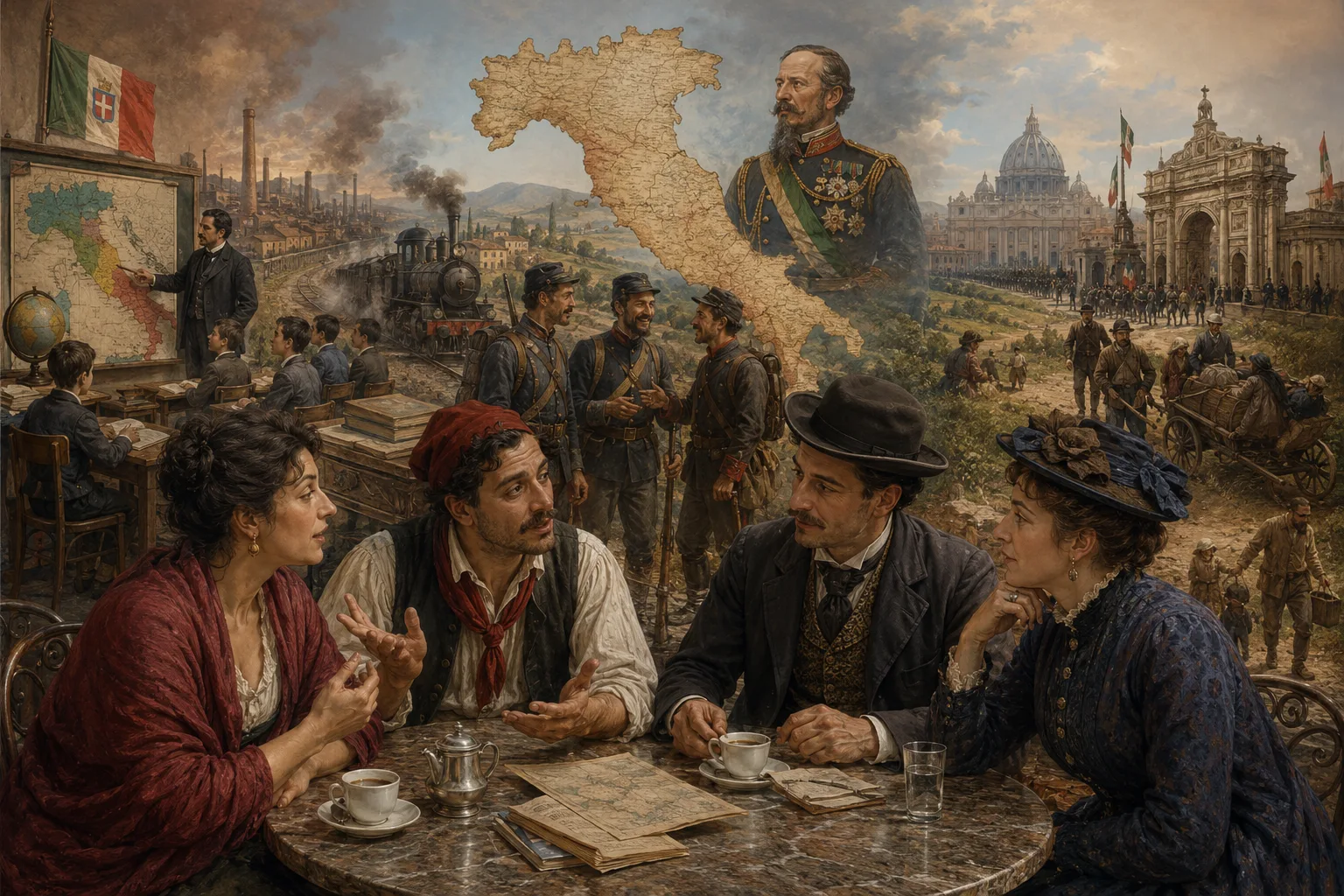
Italians around the world: beyond AIRE, migration, descendants and new mobility Credits: Image generated with AI technology

Beyond the AIRE: official data and the wider diaspora

When discussing Italians abroad, the most reliable benchmark is the AIRE, the Registry of Italians Resident Abroad. As of 1 January 2025 there were 6,412,752 registered citizens: a population comparable to a large Italian region, and nearly one in nine Italians when set against the population living in Italy. The AIRE is an administrative register of Italian citizens who have established residence outside the country, and it should be distinguished from a worldwide census of people of Italian origin. It includes those who move abroad for at least twelve months, children born abroad to Italian citizens, and those who obtain Italian citizenship while already living overseas. Registration is linked to the relevant Italian municipality and consular network: it is needed for documents, to record births, marriages and deaths, and where applicable, to vote from abroad [1] [2]. The register is a solid statistical basis, but it does not capture the full diaspora on its own. The Italian Ministry of Foreign Affairs and International Cooperation, commonly known as the Farnesina, speaks of roughly 80 million Italians worldwide, including people of Italian descent and oriundi, within the framework of roots tourism [4]. That figure of 80 million is an estimate of the vast historical and family legacy produced by Italian migration, to be understood as a cultural and demographic horizon rather than a number to add mechanically to the AIRE total. The grandson of emigrants born in Buenos Aires with Italian citizenship, a fourth-generation Brazilian who retains a Venetian surname, and a young professional who left Milan for Berlin all have different relationships with Italy, yet they belong to this same horizon. Conflating citizenship, descent and cultural identity produces impressive but unhelpful numbers.

© All rights reserved
Content created with human supervision and AI support.

Discussion

Join discussion!

There are already 0 comments on this article in the forum.

Search in Blog